
Short Interest Tracker for
Short Squeeze Stocks空头兴趣追踪器:
监控逼空风险股票
Track short interest, squeeze risk, days to cover, price, volume, borrow pressure, and catalysts with evidence.
基于证据跟踪空头兴趣、逼空风险、回补天数、价格、成交量、借券压力与催化剂。
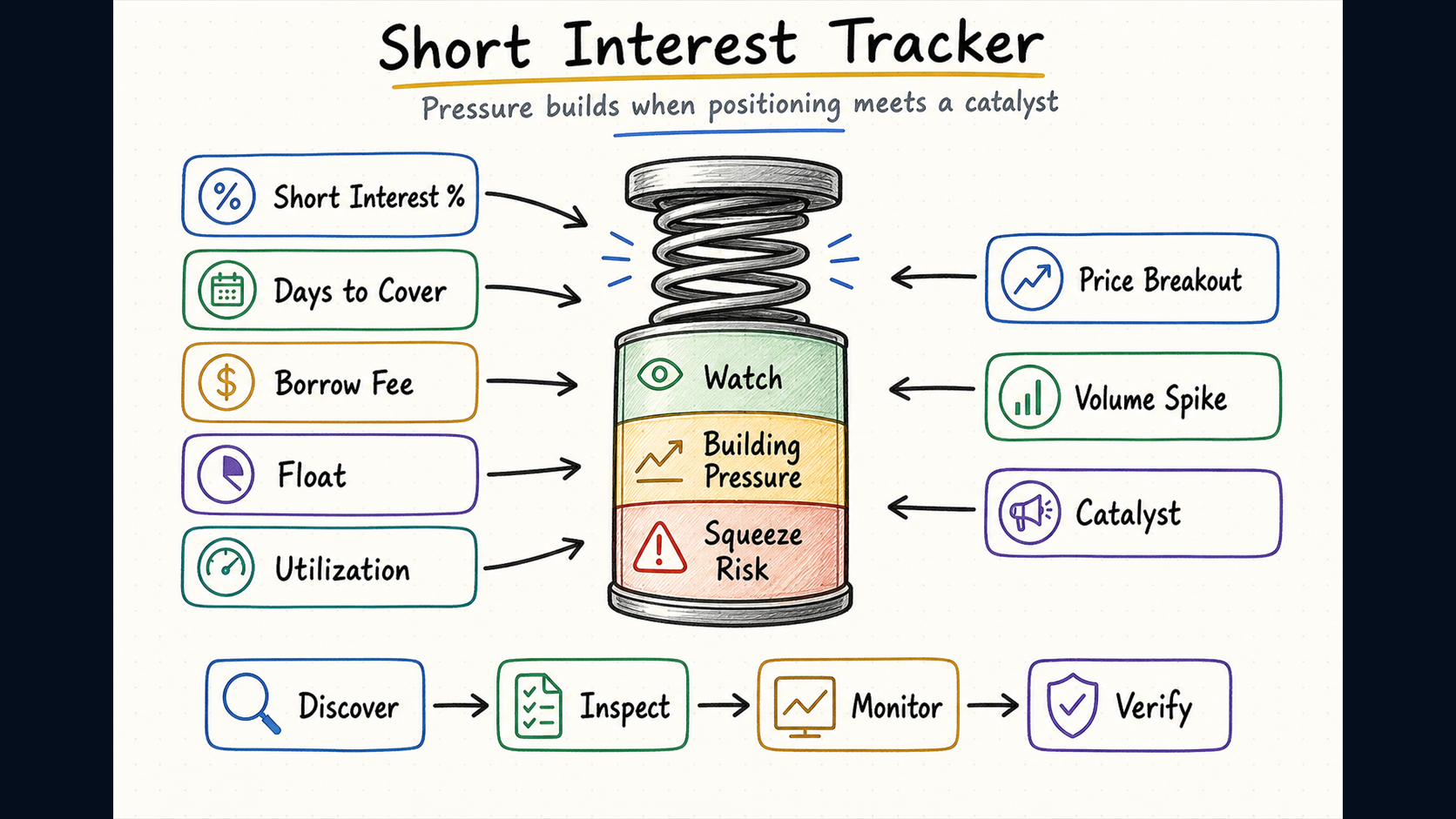
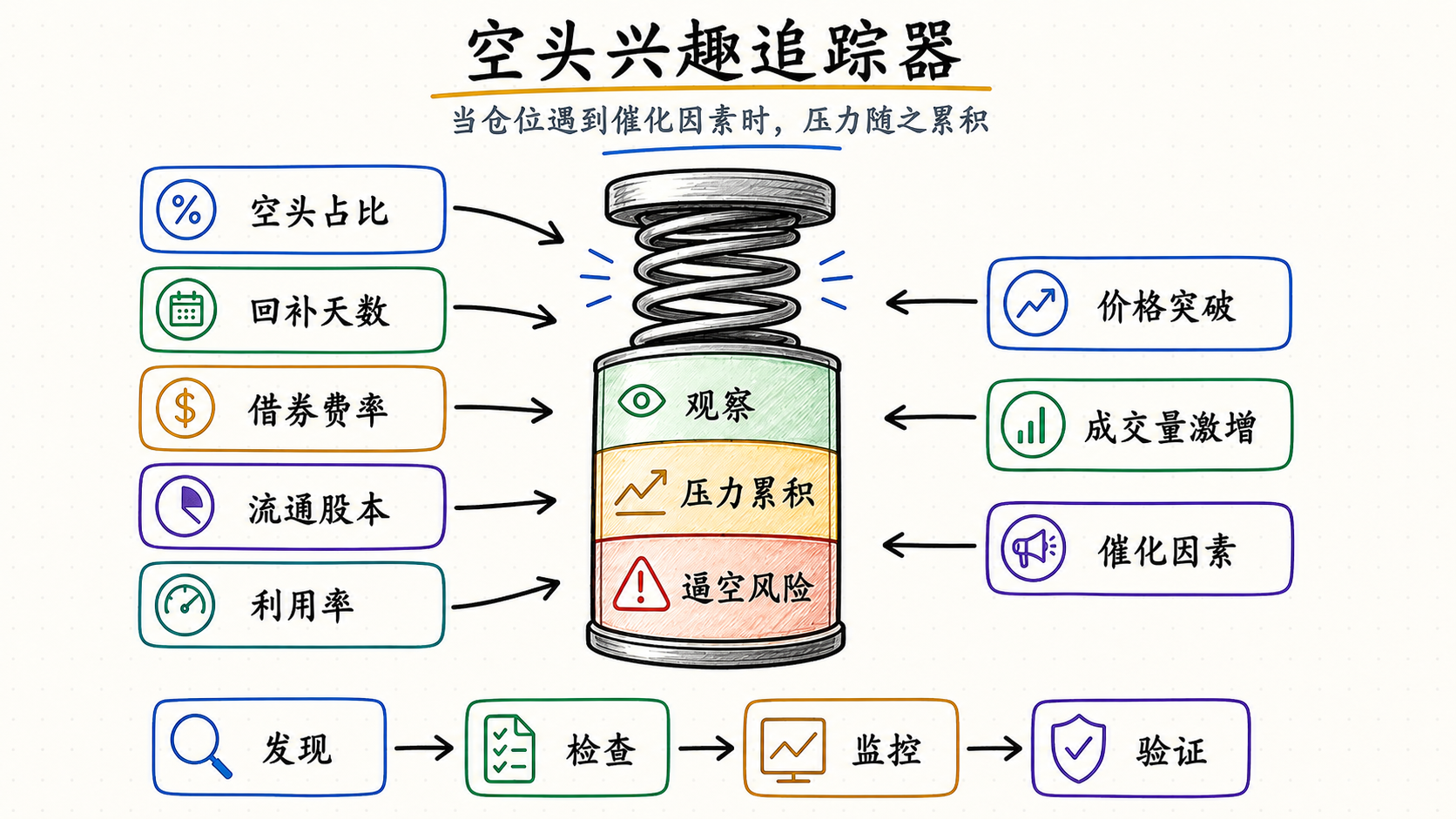
What Is a Short Interest Tracker?
Short interest is the number of shares that have been sold short and not yet covered. Investors use short interest, short interest ratio, days to cover, and percentage of float short to understand bearish positioning, crowding, and potential squeeze risk around a stock.
This QVeris scenario uses the high-volume keyword short interest as the traffic entry point, then connects it to the QVeris Short Interest Watch skill. The workflow helps agents monitor short interest data, borrow pressure, price action, volume, catalyst context, and evidence quality in a source-backed research brief.
What a Short Interest Tracker Watches
A useful tracker combines positioning, liquidity, price movement, borrow pressure, and catalysts instead of relying on one number.
Short Interest by Ticker
Track reported short interest, percentage of float short, changes over time, and ticker-level crowding signals.
Days to Cover
Estimate how many trading days it would take short sellers to cover based on short interest and average volume.
Borrow Fee and Pressure
Monitor borrow availability, borrow fee pressure, hard-to-borrow signals, and stress around short positioning.
Price Action and Volume
Connect short-interest signals with unusual volume, rapid price moves, gap risk, and liquidity conditions.
Catalyst Context
Review earnings, filings, product news, regulatory updates, meme-stock attention, and market events that can trigger squeeze risk.
Evidence Strength
Return sources, data gaps, relevance notes, confidence signals, and next verification steps for analysts.
How QVeris Routes Short Interest Workflows
QVeris keeps the workflow agent-native: discover relevant capabilities, inspect schemas, call the skill, then return structured signal output.
// Example short interest watch workflow
goal: "Monitor squeeze risk for a ticker watchlist"
discover: short interest, borrow, quotes, volume, news, filings
inspect: ticker inputs, source freshness, output schema, evidence fields
call: "QVeris Short Interest Watch skill"
output: signal table, squeeze risk, catalyst notes, sources, audit appendix
Where Short Interest Monitoring Fits
The same workflow can support stock research, risk monitoring, event-driven screens, and trading idea review.
Stock Research Watchlists
Track high short interest names with source notes, market context, and follow-up checks for analysts.
Short Squeeze Risk Review
Combine crowding, days to cover, borrow pressure, price movement, and catalysts to assess squeeze risk.
Event-Driven Monitoring
Monitor earnings, filings, product launches, regulatory updates, and news events around heavily shorted tickers.
QVeris Short Interest Watch Skill
Use the actual QVeris skill for short interest monitoring, squeeze risk, borrow pressure, catalyst context, and source-backed briefs.
Static Screener vs QVeris Watch Workflow
| Need | Static stock screener | QVeris short-interest workflow |
|---|---|---|
| Find crowded shorts | Sort by one static short-interest column | Combine short interest, float, days to cover, and borrow context |
| Understand squeeze risk | Analyst manually checks price, volume, and news | Returns price action, volume, catalysts, and relevance notes |
| Track evidence | Source trail is often outside the screener | Includes source-aware notes, data gaps, and audit appendix |
| Repeat the workflow | Manual refresh and watchlist updates | Reusable AI agent workflow for recurring monitoring |
Useful Short Interest References
External references help readers understand short interest data, short selling, and market structure context.
FINRA Short Interest
Investor-focused reference explaining short interest reporting and how short selling data is used.
Nasdaq Market Activity
Public market activity context for listed stocks, prices, and equity research workflows.
Investopedia Short Interest
Introductory guide to short interest, days to cover, and short squeeze interpretation.
Short Interest FAQ
What is short interest?
What is a short squeeze?
What is days to cover?
Which QVeris skill does this scenario map to?
Build a Short Interest Watch Agent
Use QVeris to route ticker questions to short interest, borrow, price, volume, catalyst, and filing capabilities for source-backed research briefs.
AI Agent 空头兴趣和逼空风险监控
Track short interest, squeeze risk, days to cover, price, volume, borrow pressure, and catalysts with evidence.
基于证据跟踪空头兴趣、逼空风险、回补天数、价格、成交量、借券压力与催化剂。
什么是空头兴趣?
空头兴趣是已经被卖空但尚未回补的股票数量。投资者会使用 short interest、short interest ratio、days to cover 和空头占流通股比例,来理解个股的看空仓位、拥挤程度和潜在逼空风险。
这个 QVeris 场景用 short interest 这个大流量关键词作为入口,再连接到 QVeris Short Interest Watch skill。该工作流帮助 Agent 监控空头兴趣数据、借券压力、价格走势、成交量、催化剂背景和证据质量,并生成带来源依据的研究简报。
Short Interest Tracker 应该跟踪什么
有用的追踪器会结合仓位、流动性、价格变动、借券压力和催化剂,而不是只看一个数字。
按 Ticker 跟踪空头兴趣
跟踪报告的空头兴趣、空头占流通股比例、变化趋势和个股拥挤信号。
Days to Cover
基于空头兴趣和平均成交量估算空头回补大约需要多少个交易日。
借券费率和压力
监控借券可得性、借券费率压力、难借信号和空头仓位压力。
价格走势和成交量
把空头兴趣信号与异常成交量、快速价格变化、跳空风险和流动性条件连接起来。
催化剂背景
复盘财报、公告、产品新闻、监管更新、meme-stock 关注度和可能触发逼空的市场事件。
证据强度
返回来源、数据缺口、相关性说明、置信信号和分析师的下一步验证动作。
QVeris 如何路由空头兴趣工作流
QVeris 保持 Agent 原生工作流:发现相关能力、检查 schema、调用 skill,然后返回结构化信号输出。
// Short interest watch 工作流示例
goal: "监控 ticker watchlist 的逼空风险"
discover: 空头兴趣、借券、报价、成交量、新闻、公告
inspect: ticker 输入、来源新鲜度、输出结构、证据字段
call: "QVeris Short Interest Watch skill"
output: 信号表、逼空风险、催化剂说明、来源、审计附录
空头兴趣监控适合哪些场景
同一个工作流可以支持股票研究、风险监控、事件驱动筛选和交易想法复盘。
股票研究 Watchlist
跟踪高空头兴趣个股,并提供来源说明、市场背景和分析师后续检查。
逼空风险复盘
结合拥挤度、days to cover、借券压力、价格变化和催化剂来评估逼空风险。
事件驱动监控
围绕高空头个股监控财报、公告、产品发布、监管更新和新闻事件。
QVeris Short Interest Watch Skill
使用真实 QVeris skill 进行空头兴趣监控、逼空风险、借券压力、催化剂背景和来源型简报生成。
静态筛选器 vs QVeris Watch 工作流
| 需求 | 静态股票筛选器 | QVeris 空头兴趣工作流 |
|---|---|---|
| 找到拥挤空头 | 按一个静态 short-interest 列排序 | 结合空头兴趣、float、days to cover 和借券背景 |
| 理解逼空风险 | 分析师手动检查价格、成交量和新闻 | 返回价格走势、成交量、催化剂和相关性说明 |
| 跟踪证据 | 来源链路通常在筛选器之外 | 包含来源说明、数据缺口和审计附录 |
| 重复运行 | 手动刷新和更新 watchlist | 用于周期性监控的可复用 AI Agent 工作流 |
空头兴趣常见问题
什么是空头兴趣?
什么是逼空?
什么是 days to cover?
这个场景对应哪个 QVeris skill?
构建空头兴趣监控 Agent
使用 QVeris,把 ticker 问题路由到空头兴趣、借券、价格、成交量、催化剂和公告能力,并生成来源型研究简报。