
10-K / 10-Q
Periodic financial statements, narrative, controls, and risk disclosure.
Choose submissions, documents, XBRL facts, and form records without losing filing identity or evidence.
正确选择申报元数据、文档、XBRL 事实和表格记录,同时保留版本身份与证据。
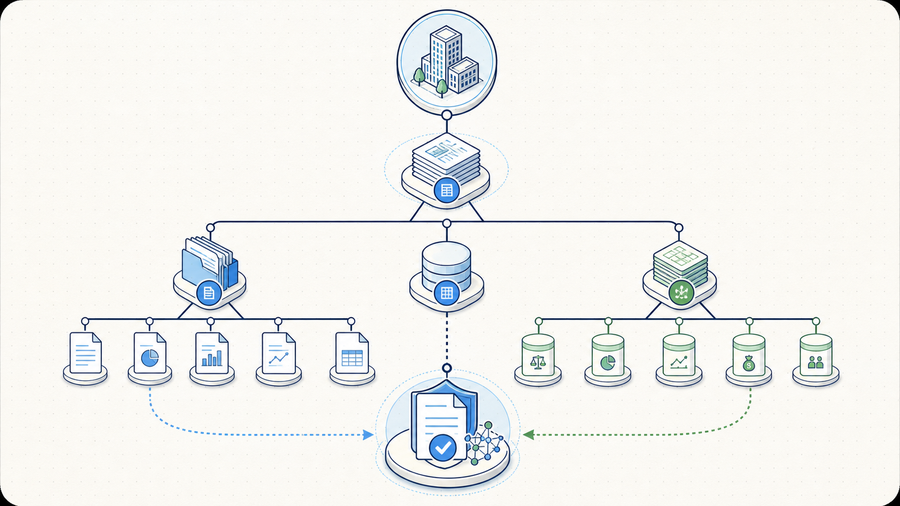
companyCIK, names, tickers, exchanges, and entity metadata.
submissionForm, filing date, accession number, and primary document.
filing indexThe authoritative inventory of documents and exhibits.
documentHTML, text, XML, XBRL, image, or exhibit file.
factConcept, taxonomy, unit, period, context, and filing source.
derived recordYour extraction plus parser version and evidence links.
companyCIK、名称、股票代码、交易所和实体元数据。
submission表格、申报日期、accession number 和主文档。
filing index该次申报全部文档与附件的权威目录。
documentHTML、文本、XML、XBRL、图片或附件文件。
fact概念、分类标准、单位、期间、上下文和来源申报。
derived record你的提取结果、解析器版本和证据链接。
A free SEC filings API search usually begins with price, but the decision is really about the answer shape and engineering responsibility. Official SEC sources provide authoritative submission metadata, filing documents, XBRL facts, and downloadable datasets. A third-party free tier may add ticker lookup, full-text or section search, normalized form-specific records, webhooks, bulk exports, or SDKs while imposing account, quota, retention, and licensing rules.
搜索免费 SEC 申报 API 往往从价格开始,但真正的选择取决于结果形态和工程责任。SEC 官方来源提供权威的提交元数据、申报文档、XBRL 事实和可下载数据集;第三方免费套餐可能增加股票代码查询、全文或章节搜索、表单专用标准化记录、webhook、批量导出或 SDK,同时带来账户、额度、保存和许可规则。
Define the job before choosing the endpoint. “Latest filings for a company” needs a submissions index; “revenue by quarter” needs XBRL facts plus taxonomy and period logic; “risk-factor text” needs document retrieval and section extraction; “insider purchase” or “institutional holding” needs ownership-form parsing; “new material event” needs form and item classification. One generic filings endpoint rarely solves all five correctly.
选择端点前,应先定义任务。“查询某公司最新申报”需要 submissions 索引;“按季度获取收入”需要 XBRL 事实、分类标准和期间逻辑;“提取风险因素”需要获取文档并解析章节;“内部人买入”或“机构持仓”需要解析所有权表单;“识别新的重大事件”则需要表单与项目分类。一个通用 filings 端点通常无法同时正确解决这五类问题。
Keep control of ingestion, caching, document retrieval, and normalization while linking every record to the SEC source.自行控制采集、缓存、文档获取与标准化,并让每条记录链接到 SEC 原始来源。
A provider can reduce setup work with ticker search, consistent schemas, extracted sections, or client libraries.服务商可通过股票代码搜索、统一结构、章节提取或客户端库减少前期工作。
A filing index is not the same as normalized 10-K financials, Form 4 transactions, or 13F holdings.申报索引不等同于标准化的 10-K 财务数据、Form 4 交易或 13F 持仓。
Test pagination, amendments, missing tickers, historical files, 429 responses, and source URL persistence.测试分页、修订、缺失股票代码、历史文件、429 响应与来源 URL 保存。
| Question | Best starting point | Do not assume |
|---|---|---|
| What did a company file? | Submissions metadata | The primary document contains every exhibit |
| What documents are in one filing? | Filing index | Filename alone explains document role |
| What financial facts were reported? | Company facts / XBRL frames | Taxonomy concepts are comparable without context |
| What does a section say? | Primary document plus section parser | A parser heading is sufficient evidence |
| What changed? | Versioned documents by accession | The newest filing can represent the past |
| 问题 | 最佳起点 | 不能默认 |
|---|---|---|
| 公司提交了什么? | Submissions 元数据 | 主文档包含所有附件 |
| 一次申报有哪些文件? | Filing index | 仅凭文件名就能判断角色 |
| 披露了哪些财务事实? | Company Facts / XBRL Frames | 不看上下文也能直接比较概念 |
| 某个章节写了什么? | 主文档 + 章节解析 | 解析器标题本身就是充分证据 |
| 哪些内容发生变化? | 按 accession 保存的版本文档 | 最新申报可以代表过去版本 |
Periodic financial statements, narrative, controls, and risk disclosure.
Current events with item codes and exhibits.
Registration statements and offering disclosure.
Beneficial ownership positions and amendments.
Insider transactions and ownership changes.
Proxy matters, governance, and executive compensation.
定期财务报表、经营叙述、内控和风险披露。
带项目代码和附件的重大事件。
注册声明和发行披露。
受益所有权持仓及修订。
内部人交易和持股变化。
股东大会、治理和高管薪酬。
The SEC EDGAR API documentation describes public JSON endpoints on data.sec.gov for submissions history and extracted XBRL data. These endpoints do not require an API key, but automated clients must identify themselves and follow current SEC access and security policies. Filing archives and primary documents live under SEC archive paths and should be linked by CIK, accession, and document name rather than treated as anonymous HTML pages.
SEC EDGAR API 官方文档说明了 data.sec.gov 上的公开 JSON 端点,包括申报历史与提取后的 XBRL 数据。这些端点无需 API 密钥,但自动化客户端必须标识自身并遵守 SEC 当前访问与安全政策。申报档案和主文档位于 SEC archive 路径中,应通过 CIK、申报编号和文档名建立关联,不能把它们当作没有身份的普通 HTML 页面。
The company submissions response contains recent form types, filing and report dates, accession numbers, primary documents, and references to older submissions files. A complete backfill must follow those older-file references, handle amendments as separate filings, and preserve the sequence in which filings became public. The index tells you what exists; it does not contain every document, exhibit, inline XBRL fact, or narrative section.
公司 submissions 响应包含近期表单类型、提交与报告日期、申报编号、主文档,以及指向更早 submissions 文件的引用。完整回填必须继续读取这些历史文件引用,把修订作为独立申报处理,并保留文件公开的先后顺序。索引只能说明“有哪些申报”,并不包含所有文档、附件、内联 XBRL 事实或叙述章节。
Companyfacts, companyconcept, and frames expose machine-readable facts. They help with standardized metrics, but each fact still has taxonomy, unit, period, form, filed date, accession, and sometimes segment or dimensional context. Selecting “the latest value” without duration-versus-instant logic or amendment handling can mix incompatible facts. XBRL also does not replace narrative sections, exhibits, signatures, or ownership-form fields.
companyfacts、companyconcept 与 frames 提供机器可读事实,但每个事实仍带有分类标准、单位、期间、表单、提交日、申报编号,有时还包含分部或维度语境。如果不区分期间型与时点型事实,也不处理修订,直接选择“最新值”可能混入不可比数据。XBRL 同样不能替代叙述章节、附件、签名或所有权表单字段。
CIK is the stable SEC entity identifier. Normalize it to the format required by the endpoint and store it alongside the ticker instead of treating ticker symbols as permanent identifiers.
CIK 是稳定的 SEC 实体标识。应按端点要求规范化 CIK,并与股票代码一起保存,不要把股票代码当作永久标识。
Separate filing date from report period, include amendments deliberately, and decide whether the application needs metadata, the primary HTML document, exhibits, or XBRL facts.
区分申报日期与报告期,明确是否纳入修订,并判断应用需要元数据、主 HTML 文档、附件还是 XBRL facts。
Store the raw response next to normalized fields. The accession number, form, filing date, CIK, retrieval time, and official SEC URL form the minimum useful provenance record.
将原始响应与标准化字段一起保存。accession number、表格类型、申报日期、CIK、获取时间和 SEC 官方 URL 构成最小可用来源记录。
Store the filing index, raw primary document, exhibit inventory, structured facts, and derived section text independently. Each derived artifact should point to source accession, document, parser version, and extraction range. This prevents a parser update from silently changing the authoritative filing record.
申报索引、原始主文档、附件清单、结构化事实和派生章节文本应分别保存。每个派生产物都要指向来源申报编号、文档、解析器版本和提取范围,避免解析器升级时静默改变权威申报记录。
Keep original filings and amendments in filing-time order, then derive a current view and an as-known-at-time view. Research backtests should see only filings public by the analysis timestamp; production applications can separately expose the latest corrected state.
原始申报与修订应按照公开时间保留,再分别生成当前视图和“当时可知”视图。历史研究只能看到分析时点以前已经公开的文件;生产应用则可另行提供最新更正后的状态。
A filing record needs more than one date. The report period describes the business period covered; the filing date is a calendar-level filing field; the SEC acceptance timestamp records when the submission entered EDGAR; retrieval time records when your system obtained it. A parsed fact can become available later than the raw document. Keep these clocks separate so an alert, backtest, and current dashboard can each use the correct one.
一条申报记录不能只有一个日期。报告期说明文件覆盖的经营期间;申报日是日历层面的提交字段;SEC 受理时间表示文件何时进入 EDGAR;抓取时间表示系统何时取得文件。结构化事实通常还会晚于原始文档完成解析。只有把这些时间分别保存,提醒、历史研究和当前看板才能使用各自正确的时点。
Submission metadata identifies the accession, form, dates and document names. This proves an index record exists, not that every artifact has been downloaded.
The primary document and required exhibits were fetched, hashed and linked to the accession. A failed exhibit download remains partial, not an empty filing.
A named parser version produced sections or facts. Store warnings, unsupported tables and source offsets; parser success is not the same as financial validation.
Schema, periods, units, totals, amendment lineage and source links passed explicit checks. Publish the validation state and unresolved exceptions with derived values.
申报元数据已经给出申报编号、表单、日期和文档名。这只能证明索引记录存在,不能证明全部文件已经下载。
主文档和所需附件已经下载、计算哈希并关联到申报编号。某个附件下载失败时,状态应为“部分完成”,而不是返回空申报。
指定版本的解析器生成了章节或事实。应保存警告、不支持的表格和来源位置;解析成功不等于财务数据已经验证。
字段结构、期间、单位、合计、修订链和来源链接通过明确检查。派生数值还应同时公开验证状态与未解决异常。
A 10-Q accepted on August 1 reports a metric of $120 million. A 10-Q/A accepted on August 20 corrects it to $112 million for the same report period. The as-known view for August 10 must still return $120 million with the original accession; the current corrected view can return $112 million with the amendment accession and a link to the superseded value. Overwriting the original row makes the correction appear knowable nineteen days too early.
某份 10-Q 于 8 月 1 日被 SEC 受理,其中一项指标为 1.20 亿美元;8 月 20 日受理的 10-Q/A 把同一报告期的数值修正为 1.12 亿美元。查询“8 月 10 日当时可知信息”时,仍应返回原始申报编号对应的 1.20 亿美元;当前更正视图可以返回 1.12 亿美元,同时关联修订文件和被替代的旧值。如果直接覆盖原始记录,就等于让这次修正在实际公开前 19 天提前可知。
Resolve CIK and verify the company identity.
Request filing metadata with form and date filters.
Use accession and filing index to select documents.
Extract fields while preserving document and section links.
Store accession, retrieval time, ETag, and parser version.
Handle amendments, duplicates, corrections, and pagination.
解析 CIK,并核对公司身份。
按表格和日期筛选申报元数据。
通过 accession 和 filing index 选择文档。
提取字段时保留文档和章节链接。
记录 accession、获取时间、ETag 和解析器版本。
处理修订、重复、修正和分页。
| Decision check检查项 | Official SEC EDGAR官方 SEC EDGAR | Third-party free tier第三方免费套餐 |
|---|---|---|
| Authentication鉴权 | No API key; identify the client.无需 API 密钥;需标识客户端。 | Usually account and API key.通常需要账户与 API 密钥。 |
| Data shape数据结构 | Source JSON, documents, XBRL facts.原始 JSON、申报文档和 XBRL facts。 | May add normalized records and search.可能提供标准化记录与搜索能力。 |
| Free boundary免费边界 | Public access under current policy.可按 SEC 当前政策公开访问。 | Quota, endpoint, history, or trial limits.可能存在调用额度、端点范围、历史数据或试用期限限制。 |
| Must verify必须核对 | Client identity, caching, pacing, endpoint semantics.客户端标识、缓存策略、请求频率与端点语义。 | Quota, freshness, provenance, license, export rights.调用额度、数据新鲜度、来源追溯、使用许可和导出权。 |
| Historical completeness历史完整性 | Recent and older submissions files, archives, amendments, primary documents and exhibits require your ingestion logic.近期与历史 submissions 文件、archive、修订、主文档和附件需要自行采集。 | Verify oldest date, included forms, amendments, deleted or reprocessed records, and bulk access.核对最早日期、表单范围、修订、删除或重处理记录和批量访问。 |
| Derived content派生内容 | You own parsing, section boundaries, taxonomy logic, and parser versions.章节解析、边界、分类逻辑和解析器版本由自身负责。 | Verify extraction method, evidence offsets, correction policy, and whether output is provider-derived.核对提取方法、证据位置、更正规则,以及输出是否由供应商派生。 |
| Source portability来源可迁移性 | Official identifiers and documents remain available under SEC policy.官方标识和文档可按 SEC 政策访问。 | Check whether raw filings, source URLs, normalized exports, and cached history can leave the service.检查原始申报、来源 URL、标准化导出和缓存历史能否迁出服务。 |
| Gate | Pass condition | Failure action |
|---|---|---|
| Identity | CIK and issuer match | Stop and resolve entity |
| Version | Accession is preserved | Do not merge records |
| Source | Every claim links to a document | Mark unsupported |
| Rate policy | User-Agent, pacing, retry are configured | Back off and queue |
| Parser | Version and test fixtures are stored | Quarantine changed layouts |
| 门槛 | 通过条件 | 失败处理 |
|---|---|---|
| 身份 | CIK 与发行人一致 | 停止并重新确认实体 |
| 版本 | 保留 accession | 不能合并记录 |
| 来源 | 每个结论都有文档链接 | 标记为缺乏支持 |
| 访问策略 | 配置 User-Agent、请求间隔和重试 | 退避并排队 |
| 解析器 | 保存版本和测试样本 | 隔离版式变化 |
Create one request layer that sets a descriptive User-Agent, timeout, and accepted response type. Add conservative pacing, conditional or immutable caching where appropriate, honor Retry-After, and retry temporary failures with jittered exponential backoff. Treat 403, 404, 429, and 5xx responses as different operational states rather than returning an empty dataset.
建立统一请求层,设置说明性 User-Agent、超时时间与预期响应格式。控制请求节奏,按资源性质使用条件缓存或不可变缓存,遵守 Retry-After,并对临时故障使用带随机抖动的指数退避。应分别处理 403、404、429 和 5xx,而不能一律返回空数据。
For form-specific implementation details, use the QVeris guides for 10-K data, 10-K annual filing data, and S-1 registration filing data.
如需单表格实现细节,请参考 QVeris 的 10-K 数据、10-K 年报数据与 S-1 注册申报数据指南。
Search by job—submission metadata, documents, facts, sections, or ownership—then inspect the exact input and output contract. Continue with SEC submissions tool, then confirm the calling contract in the QVeris REST API reference.
按任务搜索申报元数据、文档、事实、章节或所有权能力,再检查精确输入输出契约。 可继续打开SEC Submissions 工具,并通过QVeris REST API 参考核对调用契约。
Yes. The SEC publishes public submissions and XBRL APIs without an API key, along with filing archives and datasets. Third-party free tiers differ in normalization, search, quotas, and rights.
Public data.sec.gov endpoints do not require one. Automated clients should identify themselves, follow current SEC access policies, pace requests, and cache responsibly.
Resolve ticker to CIK and retain an effective-dated mapping. Third parties may automate this, but CIK, accession, form and document identity should remain in stored records.
No. It is an index containing metadata and document references. Fetch the primary document and required exhibits separately; follow older-submission references for complete history.
No. They are tagged facts with taxonomy, unit, period, form and source context. Statement presentation, narrative, custom tags, dimensions, and amendment logic require additional work.
Keep each accession and raw artifact in filing-time order, then derive current and point-in-time views. Never overwrite the original filing with the amended result.
Test metadata, full documents, an amendment, an older filing, XBRL facts, form-specific records, provenance, pagination, latency, exports, licensing, and failure behavior.
有。SEC 提供无需 API 密钥的公开 submissions 与 XBRL 接口、申报 archive 和数据集;第三方免费套餐在标准化、搜索、额度和权限上各不相同。
公开 data.sec.gov 端点无需密钥。自动化客户端应标识自身、遵守当前 SEC 访问政策、控制请求节奏并合理缓存。
应先把 ticker 解析为 CIK,并保留带有效期的映射。第三方可以自动处理,但记录中仍应保存 CIK、申报编号、表单和文档身份。
不是。它属于包含元数据与文档引用的索引。主文档和所需附件需另行获取;完整历史还要继续读取其引用的早期 submissions 文件。
不等于。它们是带分类、单位、期间、表单和来源语境的标签事实;报表展示、叙述、自定义标签、维度和修订仍需额外处理。
按照公开时间保留每个申报编号和原始产物,再生成当前视图与时点化视图,不能用修订结果覆盖原文件。
应测试元数据、完整文档、修订、历史申报、XBRL 事实、表单专用记录、来源、分页、延迟、导出、许可和失败行为。