
Why Can’t DeepSeek or Doubao Answer “What’s the Stock Price Today?”
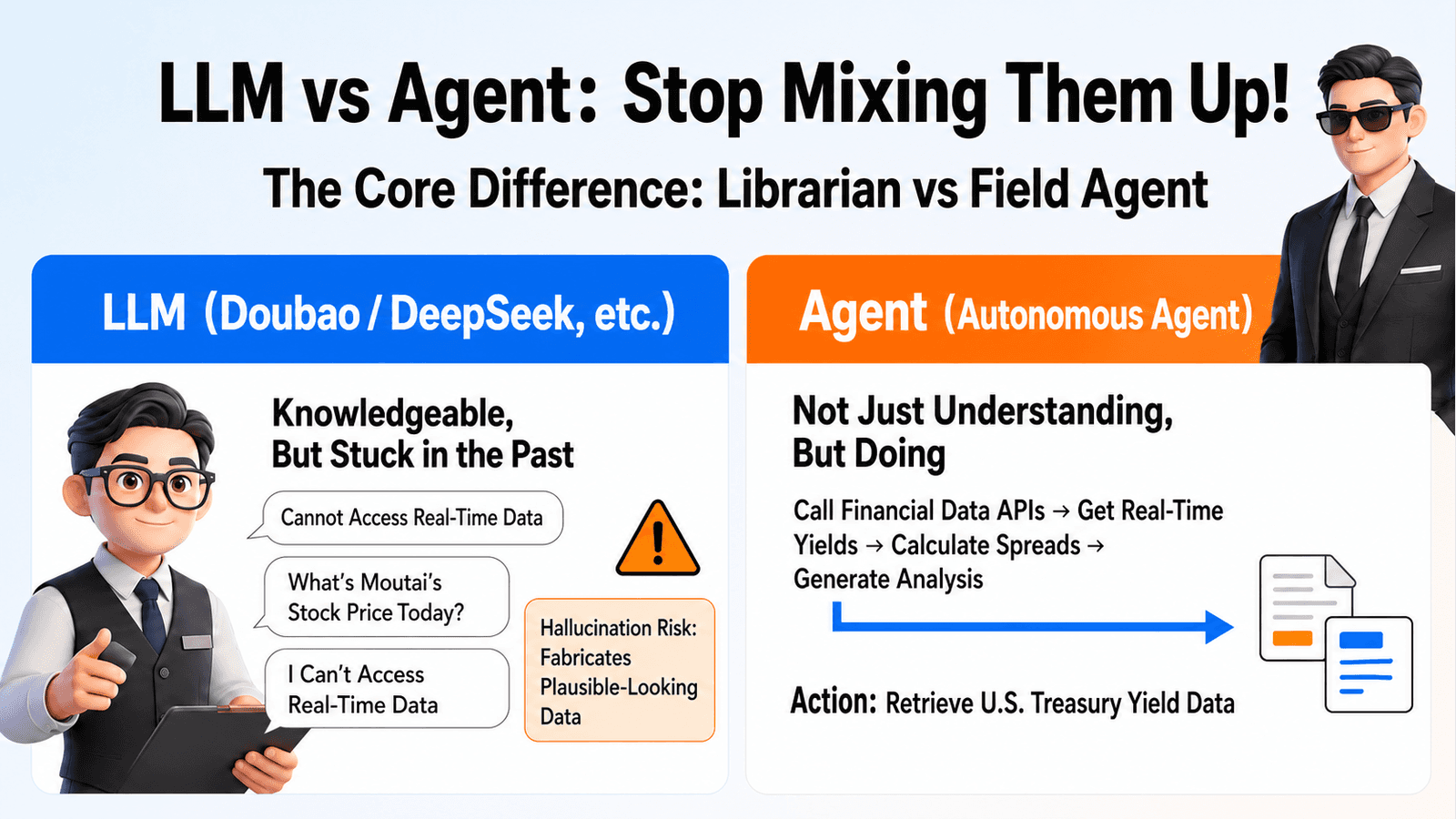

A few days ago, a friend asked me: “I asked DeepSeek what Moutai’s stock price is today, and it said it couldn’t find it. But you said QVeris can. Aren’t they both AI?”
It is a good question. Many people put Doubao, Kimi, DeepSeek, and QVeris into the same bucket and think they are all “AI chatbots.” In reality, they are fundamentally different species: one is a “librarian,” and the other is an “agent.”
This article explains the essential difference between the two, and why investment research decisions need the latter.
LLMs: Knowledgeable, but Living in the “Past”
Large language models (LLMs) such as Doubao, Kimi, and DeepSeek are, in essence, “super-compressed libraries.”
They compress massive amounts of text from the internet into model parameters, so when you ask, “What is Buffett’s investment philosophy?” they can answer fluently. The problem is that their knowledge has a cutoff date.
DeepSeek’s knowledge may stop several months ago. When you ask, “What is Moutai’s stock price today?” it can only respond helplessly: “I cannot access real-time data.”
An even bigger issue is hallucination. To “answer like a human,” an LLM may sometimes fabricate data that sounds plausible. I once used a large model to look up a company’s revenue. It gave me a precise number and then confidently analyzed the reasons for the growth. But when I checked the company’s official site, the numbers did not match at all.
Wait, am I being too absolute? Not every LLM hallucinates, but it is a common risk. For investment decisions, that risk can be fatal.
Agents: Not Just “Knowing,” but “Doing”
The core difference between an Agent and an LLM is that an Agent can call tools.
Imagine this scenario: you want to know whether now is a good time to buy U.S. Treasuries. That requires the U.S. 10-year Treasury yield, China’s 10-year government bond yield, and the trend in the spread between the two.
A pure LLM can only give you “general advice” based on training data, such as “U.S. Treasury yields are affected by inflation expectations...” It may be correct, but it is not useful enough.
An Agent is different. It will: call financial data APIs → retrieve real-time yields → calculate the spread → generate an analysis.
There is another detail: an Agent can execute actions. For example, you can ask it to “send me China-U.S. interest rate spread data every Monday at 9:00 a.m.,” and it can actually schedule and send that message.
That is what QVeris + openclaw does. It is not another “chatbot,” but an AI “capability router.”
QVeris: The “Universal Socket” for Data Tools
There are many Agent frameworks on the market today. So why QVeris?
Three keywords: breadth, depth, and standardization.
| Dimension | Traditional approach | QVeris approach |
| Data coverage | Single data source | 10,000+ tools covering the entire market |
| Data quality | Web scraping, error-prone | Direct API connections with exchange-level precision |
| Integration cost | Separate development for each source | Unified protocol, integrate once |
| Usage | Manual lookup | Natural-language retrieval in one sentence |
Put simply, QVeris gives AI “professional financial analyst database access,” and lets you call it through natural language.
Real-World Comparison: Same Question, Two Answers
Instead of talking in abstractions, let’s look at an actual comparison. For the same question, a pure LLM and QVeris give completely different answers:
👤 Question: “Help me look at recent changes in the China-U.S. interest rate spread.”
🤖 Pure LLM: It pulls from various web pages, only provides key data, cannot directly call database data, and may easily make things up
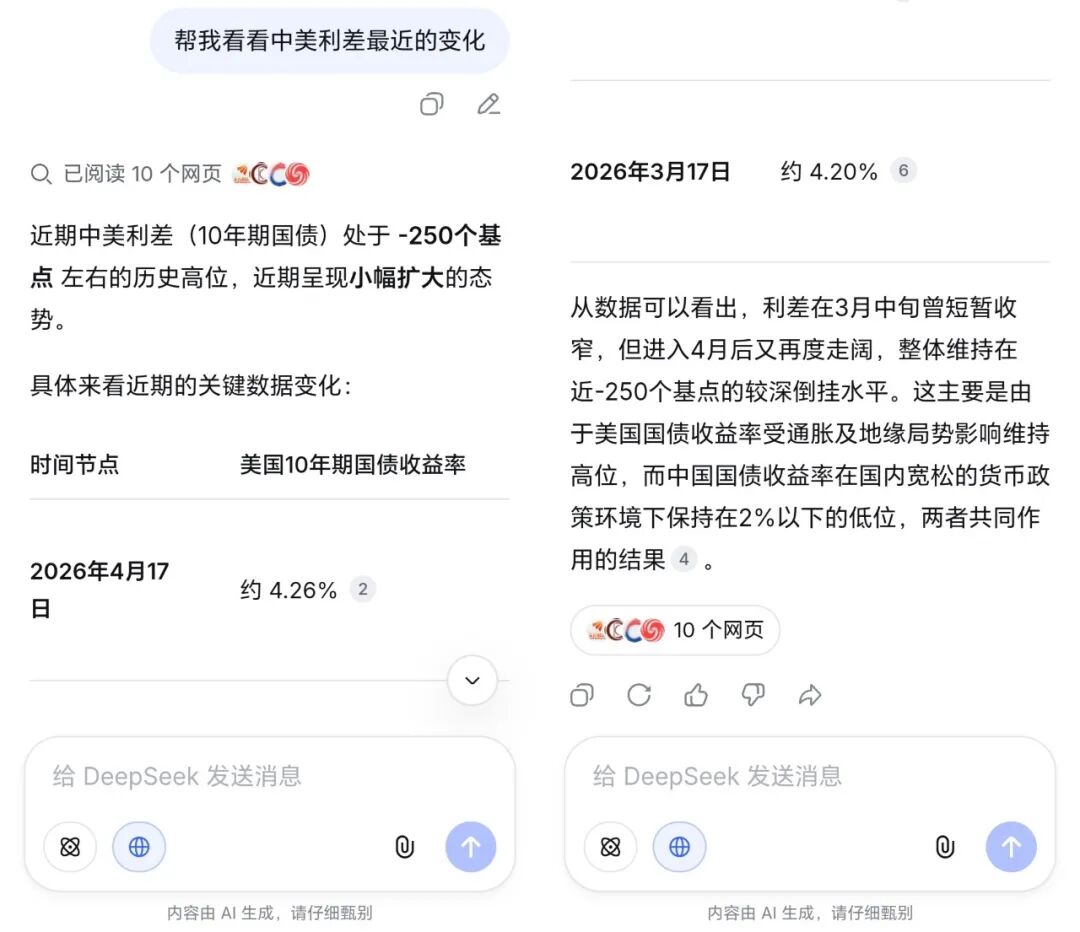
Comment: The answer may sound convincing, but data pulled from various web pages is not accurate enough, and you cannot make a decision based on it.
🤖 QVeris Agent:
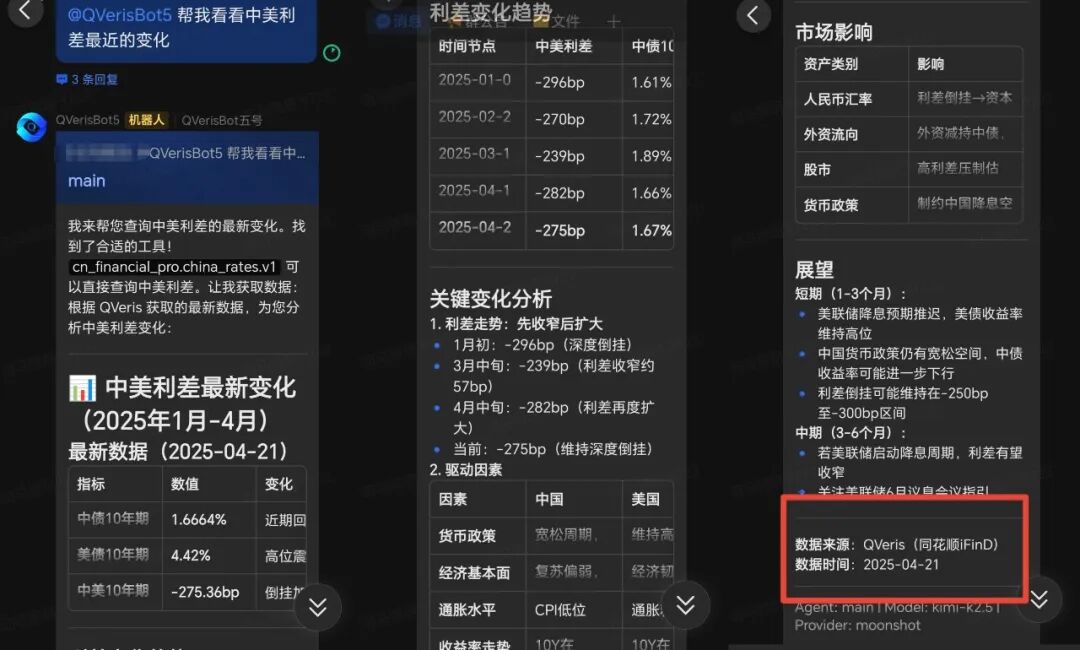
Comment: It provides specific numbers, identifies anomalies, offers an analytical framework, and has traceable data sources. You can use this to support trading decisions.
That is the essential difference: one is “popular science,” and the other is “intelligence.”
Actually, that is still not precise enough. A pure LLM can also output numbers if you provide the data yourself. The key is that it cannot actively retrieve the data. That is the core distinction.
Agents Can “Operate Continuously”
Pure LLM conversations are fragmented. You ask a question, it gives an answer, and the context is limited.
QVeris + OpenClaw can support a much broader range of scenarios:
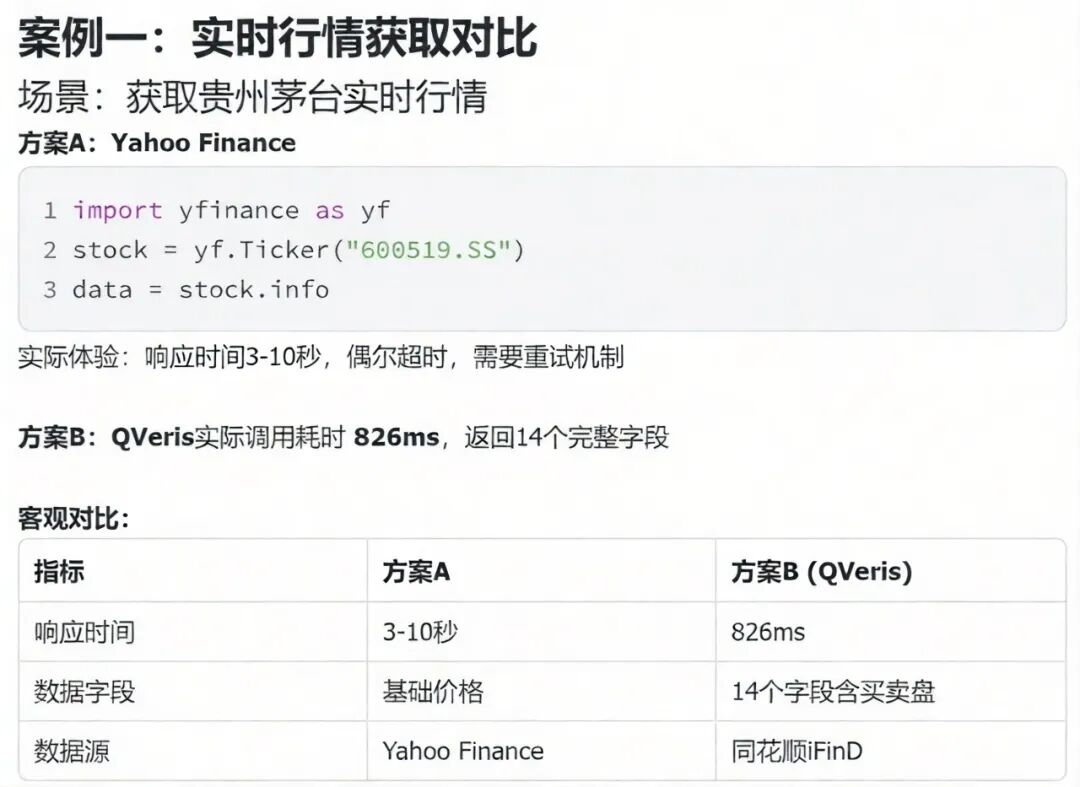
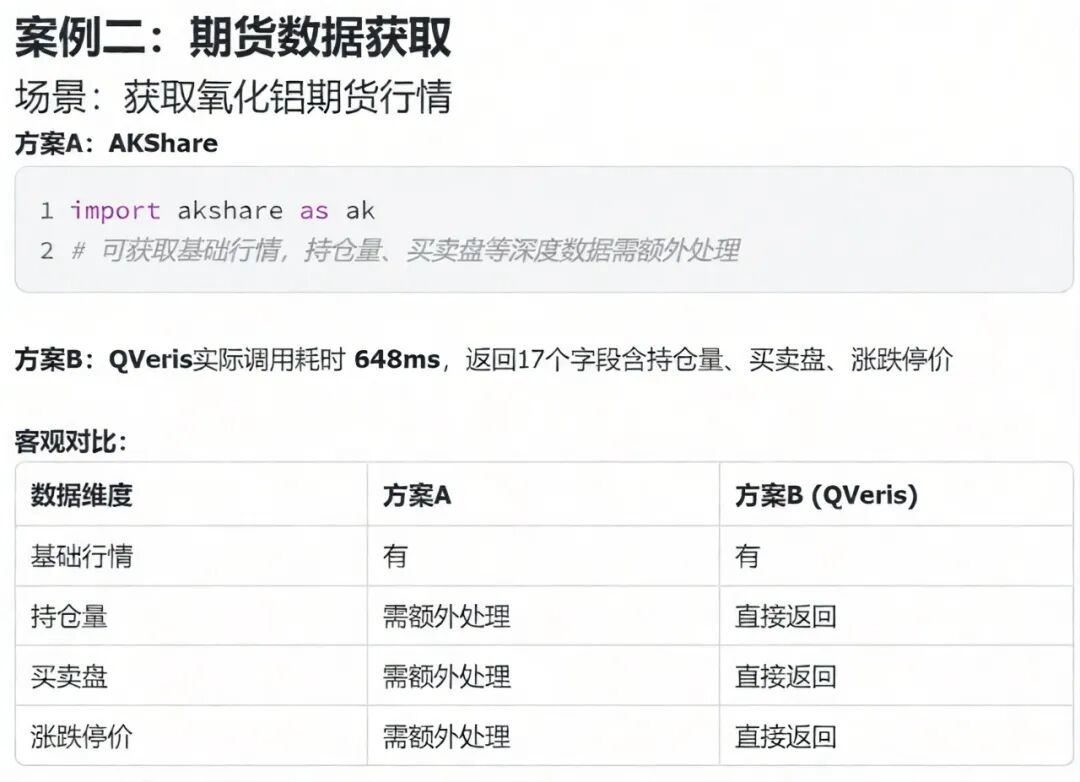
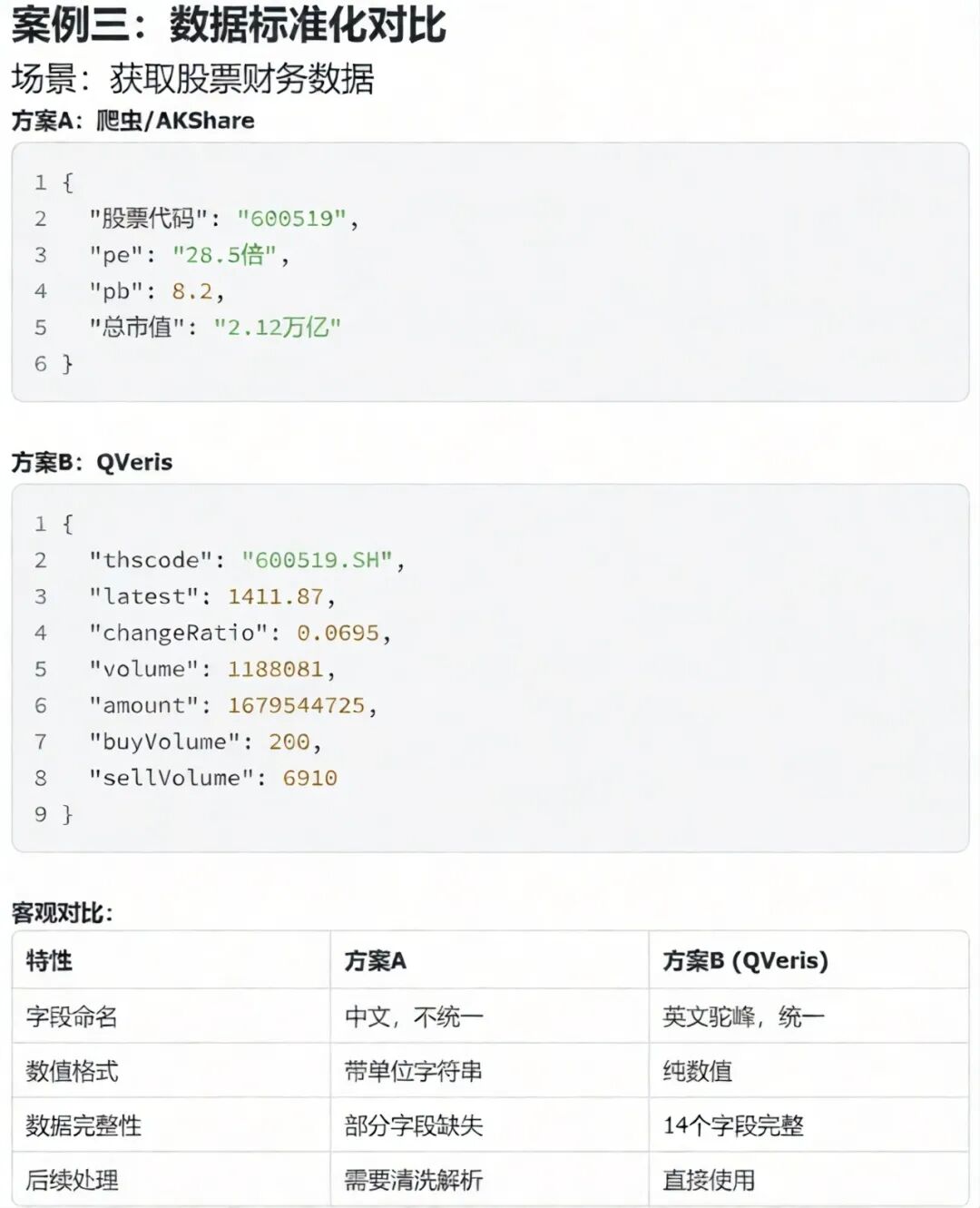
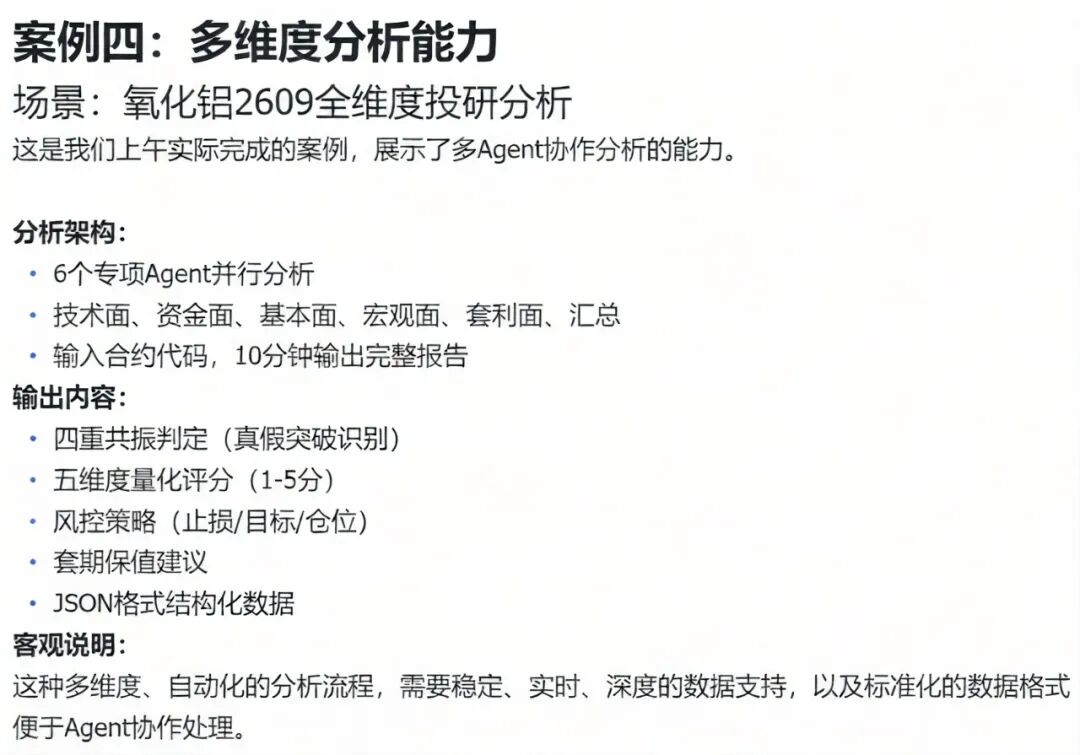
Once You Understand the Difference, You Also Need to Know the Boundaries: When Should You Use Which?
Use a pure LLM (Doubao/Kimi/DeepSeek) when you need to:
-
Do creative writing or brainstorming
-
Learn concepts and understand principles
-
Discuss topics that do not require real-time data
Use an Agent (QVeris) when you need to:
-
Look up real-time stock prices, exchange rates, or interest rates
-
Perform quantitative analysis or financial comparisons
-
Make investment decisions that require precise numbers
-
Run multi-step data query tasks
In short: for “ideas,” use an LLM; for “facts,” use an Agent.
QVeris Is “Data Intelligence,” Not Just Querying
QVeris is not designed to replace your investment research work. It is designed to amplify your capabilities.
Previously, if you wanted to find one data point, you had to open Wind or Choice and search for quite a while. Now, with one sentence, AI retrieves it for you.
Previously, if you wanted to compare several companies, you had to manually copy and paste data into Excel. Now, with one sentence, AI generates the comparison table.
That is the value of Agents: automating repetitive, tedious data work so people can focus on real thinking: judgment, decisions, and conviction.
Conclusion:
AI is reshaping investment research workflows, but many people are still using AI as if it were just a “chatbot.” That is like riding a sports car as if it were a bicycle. Only by understanding the difference between LLMs and Agents, and choosing the right tool, can you truly benefit from the efficiency revolution AI brings.
If you have more customized needs in macroeconomic data analysis or quantitative tool development, feel free to leave us a message in the background and talk with us!
[Tap Share in the lower-right corner at the end of this article] and recommend useful tools to your trading partners! 📈