
From One-Off Prompts to Continuous Workflows: Why Investment Research Agents Need a Durable Data Entry Point
The conclusion first:
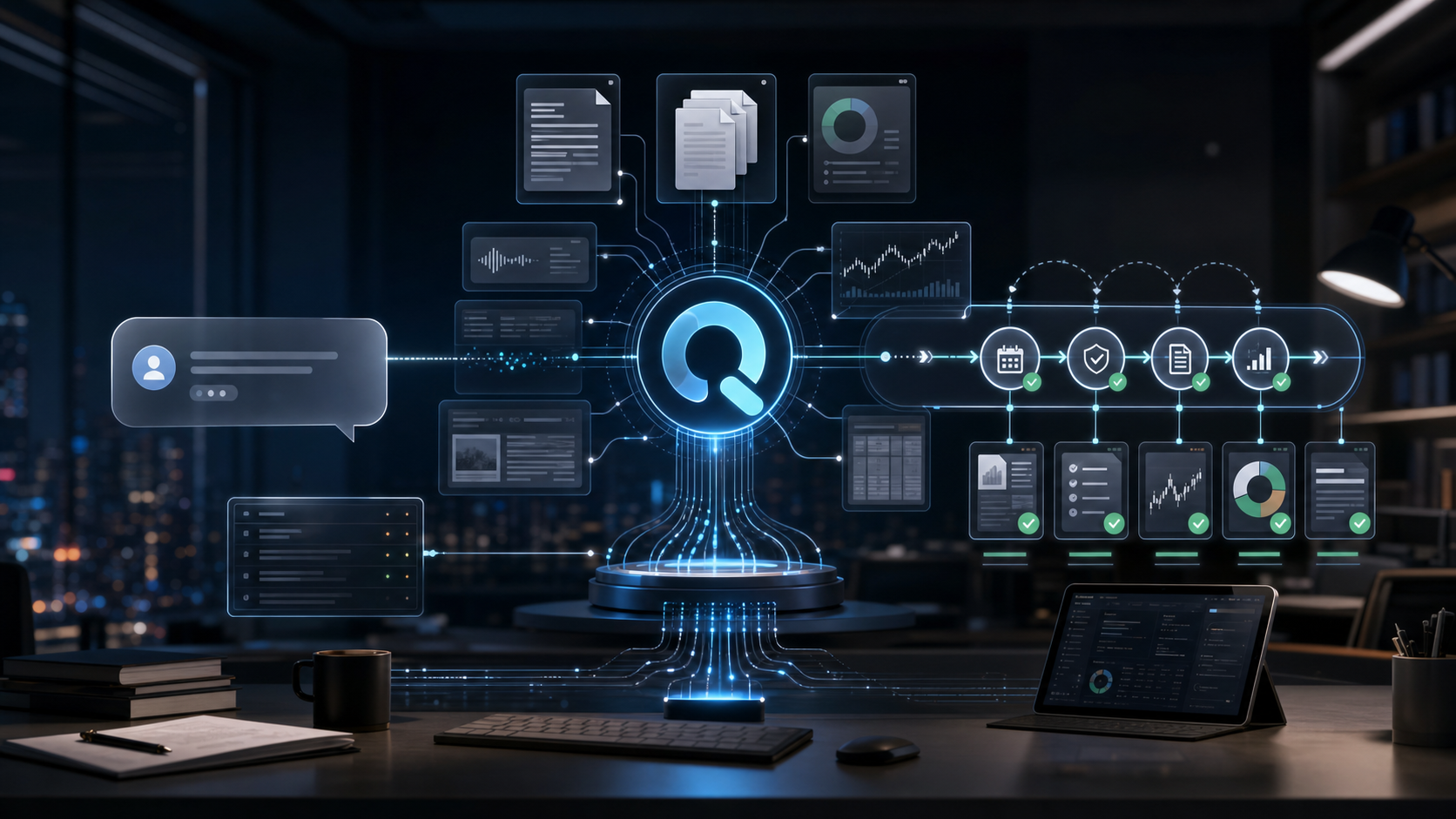
The real difficulty for investment research Agents is not writing a polished piece of analysis. It is continuously obtaining data that is trustworthy, traceable, and reusable.
A one-off Prompt can answer one question.
But investment research is not one question.
Investment research is a set of workflows that keep changing.
Today you need to read earnings reports. Tomorrow you need to follow an earnings call. The day after that you need to update a valuation model. Next week, a news item may force you to rerun the assumptions.
If an Agent starts from scratch every time, searches from scratch every time, and judges from scratch every time, it may look smart, but it is hard for it to truly enter investment research production.
Why Are One-Off Prompts Not Enough?
When many people first try an investment research Agent, they ask a very direct question:
"Help me analyze whether Nvidia is still worth buying."
The model can usually produce a well-structured answer:
Business, financial performance, competitive landscape, valuation risks, and investment conclusion.
The problem is that this kind of answer often has three hidden risks.
First, the data source is unstable.
Which version of the financial report did it read? Did it check the latest earnings call? Did it align news with stock-price changes? It is hard for the user to confirm.
Second, the analysis cannot update automatically.
Today's conclusion may be overturned tomorrow by a new announcement, policy change, or earnings guidance. A one-off Prompt will not come back and check by itself.
Third, the process is not auditable.
In investment research, "what is the conclusion" is less important than "how did you get this conclusion." Especially when the output is shown to clients, investment committees, risk-control teams, or compliance teams, the Agent needs to leave a data trail.
So an investment research Agent is not a chatbot that answers once after being asked once.
It is more like a research assistant that keeps working.
What Does a Real Investment Research Workflow Look Like?
Take one company as an example. An investment research Agent needs to do at least the following:
Discover basic company information.
It needs to know the ticker, exchange, industry, company profile, management team, and fiscal-year basis.
Read financial data.
It needs to obtain original filings, standardized financial statements, historical metrics, revenue structure, cash flow, and the balance sheet.
Track regulatory filings.
10-K, 10-Q, 8-K, and material-event announcements can all change an investment judgment.
Read earnings calls.
What did management say? What did analysts ask? Did guidance change? Did the tone become weaker?
Monitor external signals.
News, price, trading volume, industry data, and competitor moves can all trigger renewed analysis.
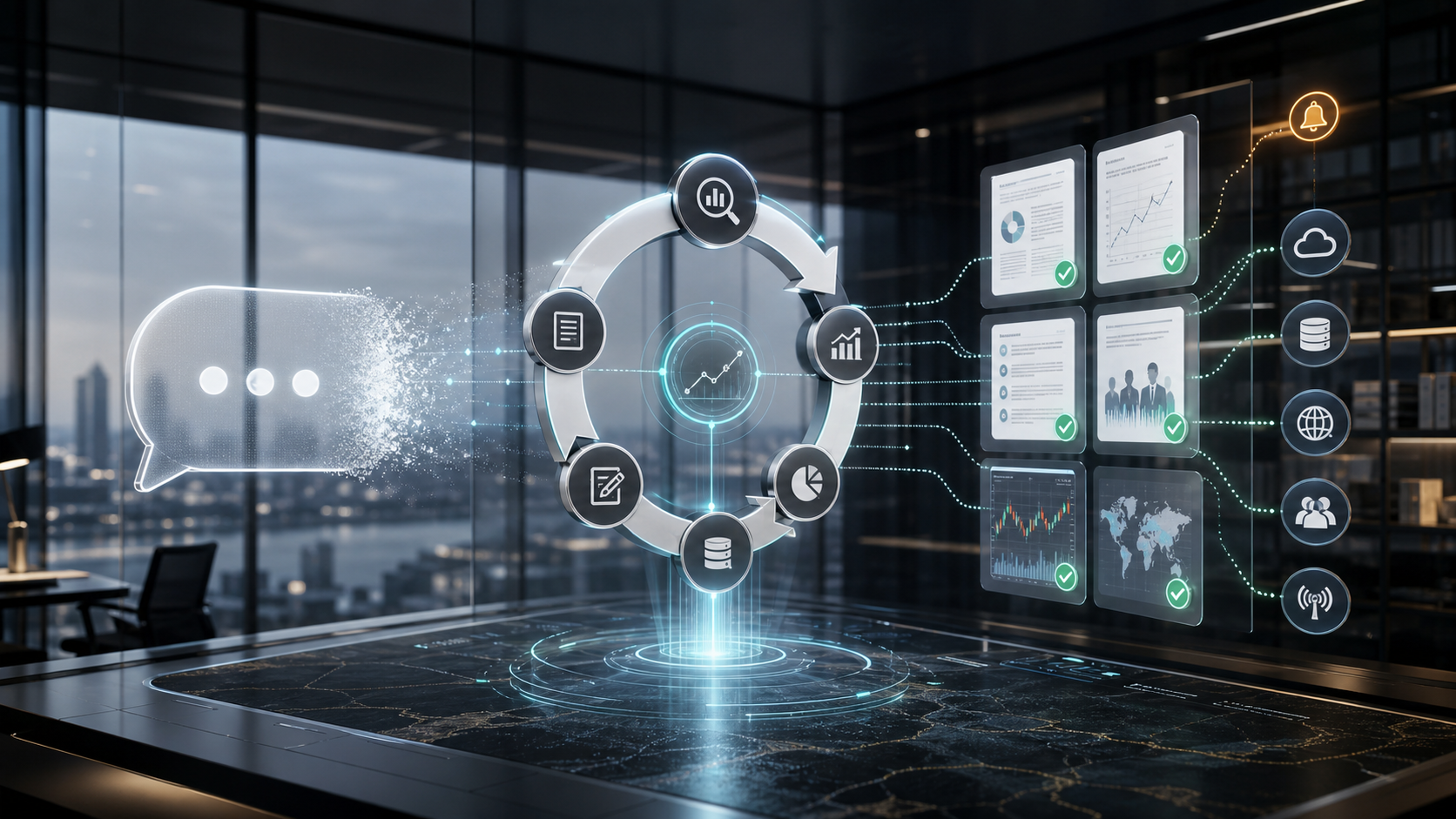
Finally, it needs to turn all of this into a workflow that can run repeatedly:
Check news once per day.
Automatically update the model after each quarterly earnings report.
Reread the transcript after an earnings call is released.
Regenerate the memo after valuation assumptions change.
Every tool call, cost, and result can be traced later.
That is an "investment research Agent."
What Is Missing Is Not the Model, but the Entry Point
Today's large models are already good at writing.
They can summarize earnings calls, explain financial reports, generate tables, and write conclusions that sound like an analyst.
But the question is:
Where does the data come from?
If every Agent has to connect to the SEC, FMP, market data, news, company databases, document parsing, web search, and database permissions on its own, the work quickly gets out of control.
API keys become scattered.
Field formats are inconsistent.
Costs are opaque.
Interface quality is hard to compare.
When something fails, it is unclear which provider should replace it.
This is why a "durable data entry point" becomes infrastructure for investment research Agents.
An Agent should not hard-code dozens of data sources.
It should be able to describe its need first, then discover tools, inspect schemas, and call them.
In other words:
I need the latest earnings call for a company.
I need original financial statements.
I need SEC filings.
I need a company profile.
I need historical employee counts.
I need news and market prices.
Then the system tells it where those capabilities are, how to call them, how much they cost, what structure they return, and whether the process is auditable.
What Is QVeris Doing Here?
This time, I used QVeris for a simple discovery:
The query direction was:
investment research agent earnings transcripts SEC filings financial statements analyst estimates stock news market data
Among the capabilities returned by QVeris, we can already see a typical set of investment research entry points:
- Earnings transcript symbols: discover which companies have earnings call transcripts
- Transcript dates by symbol: look up earnings call dates by company
- Latest earning transcripts: get the latest list of earnings calls
- SEC filings by name: search SEC filings by company name
- As reported financial statements: obtain a company's originally disclosed financial reports
- SEC company profile: get a full SEC company profile
- Historical employee count: view changes in a company's historical employee count
- Executive compensation: inspect management compensation and governance signals
This is not a story about "QVeris has already written the research report for you."
More precisely, QVeris works at the layer before that:
It lets Agents find real-world data capabilities and inspect and call them through a unified protocol.
This is simple, but important.
Because for an investment research Agent to work over the long term, the first step is not generating opinions. It is reliably entering the data world.
From Prompt to Workflow
The logic of a one-off Prompt is:
"I ask you a question, and you give me an answer."
The logic of a continuous workflow is:
"I give you a research objective, and you keep monitoring, updating, verifying, and leaving an audit trail for me."
The difference between the two is not a better prompt.
It is the data entry point, tool selection, permissions, cost, auditability, and scheduling.
This is also why investment research Agents will move from "analysts inside a chat box" toward "analysts inside a workflow."
In the future, an investment research Agent may automatically do the following every morning:
Check whether portfolio companies have new announcements.
Find that a company has released its latest earnings call transcript.
Call financial data tools to update the model.
Compare management language this quarter with the previous quarter.
Flag changes in risk.
Generate a brief.
Leave behind every data source and call cost.
Humans still make the final judgment.
But Agents will take on more and more of the repeated work: checking, reading, and aligning again and again.
Final Judgment
The end state of investment research Agents is not generating a decent-looking analysis once.
It is long-term data access, continuous operation, and reviewability at any time.
Whoever can help Agents find data, call data, explain data, and audit data more reliably will be closer to real investment research productivity.
This is why a capability routing network like QVeris becomes important.
Because in the Agent era, data is not a static repository.
Data becomes the entry point to workflows.