
Starting with FMP: Helping Agents Truly See the Financial World
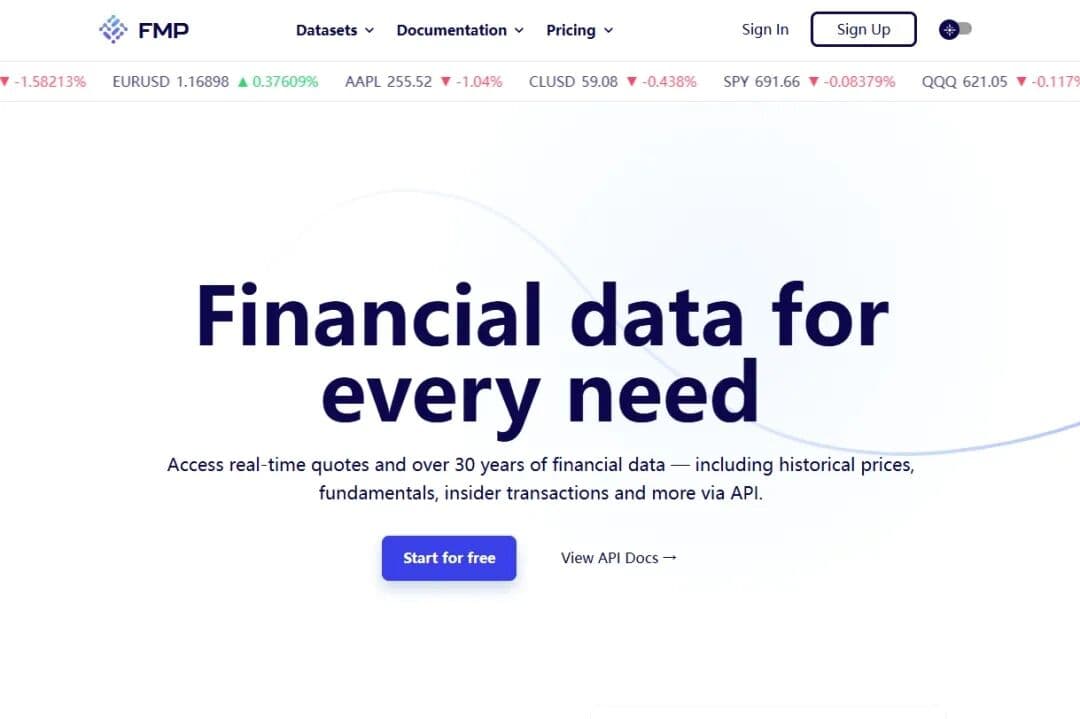
QVeris.ai has recently integrated Financial Modeling Prep (FMP).
If you have worked on financial analysis, quantitative research, or data products, there is a good chance you are already familiar with it. FMP provides structured, continuously updated financial data APIs covering company financial statements, valuation metrics, market data, macroeconomic data, and more. It serves as the data foundation behind many financial tools and scripts.
But when FMP is connected to the world of Agents, its meaning changes.
It is no longer just a data API built for people. It becomes one of the financial capabilities that an Agent can actively search for, select, and call.
Before vs. after integration: what can an Agent do differently?
A simple financial question makes the difference easy to see.
For example:
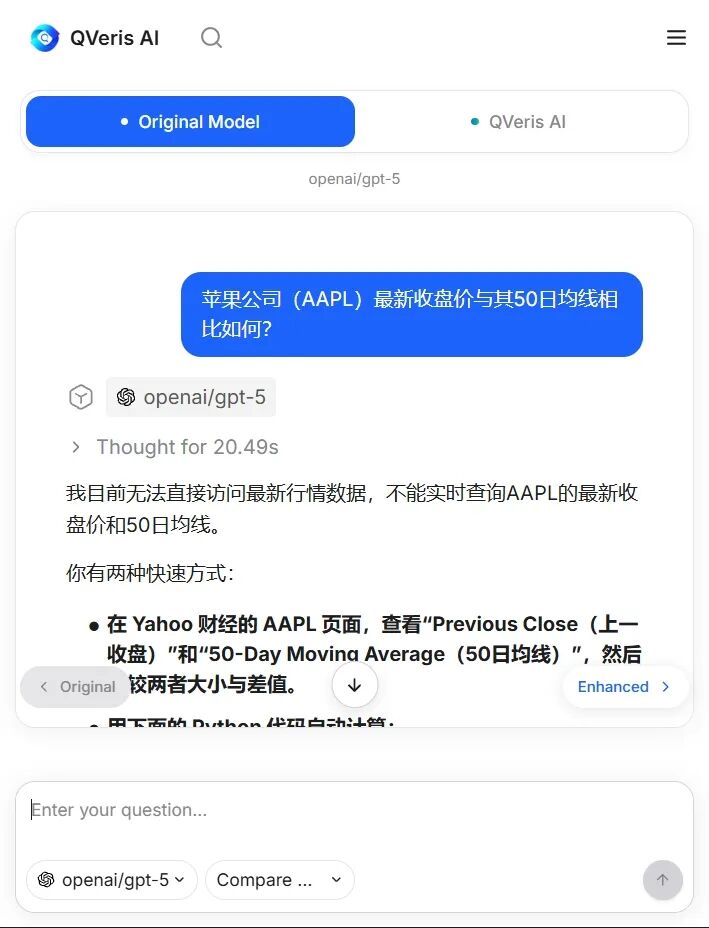
- “How does Apple’s (AAPL) latest closing price compare with its 50-day moving average?”
- “Show NVIDIA’s (NVDA) revenue growth and valuation ratios.”
- “Get BlackRock’s latest 13F holdings report.”
- “Compare Bitcoin’s (BTC) price movement over the past 6 hours.”
Before integration:
- The Agent could only analyze based on existing knowledge or a small set of fixed plugins
- Data freshness could not be guaranteed
- If a data source became unavailable, the task would simply stop
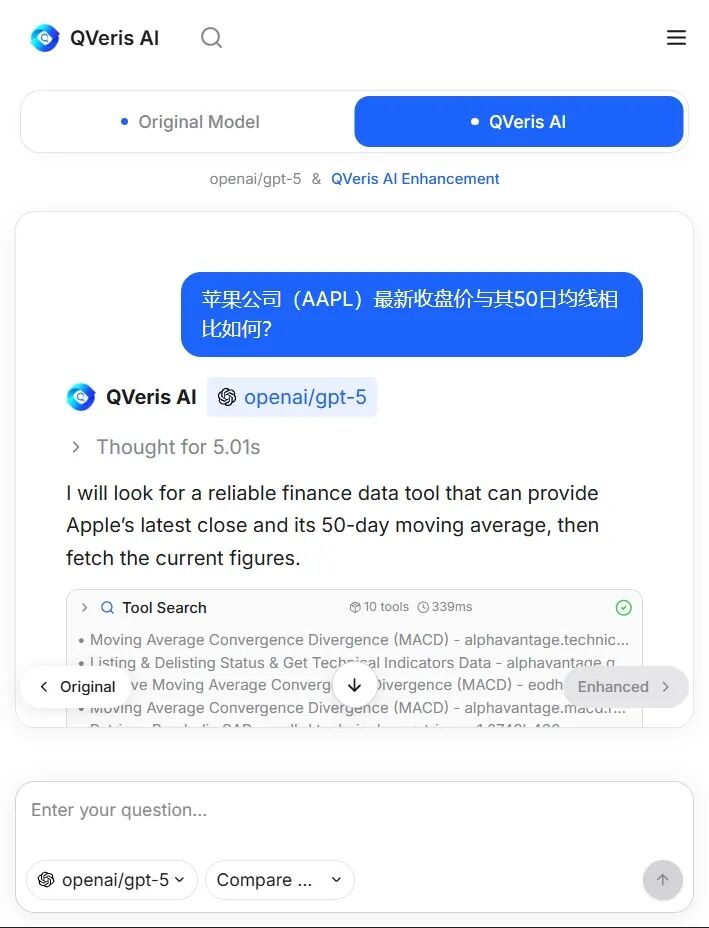
After integrating FMP:
- The Agent can directly call the latest financial statements, market data, and valuation data
- It can search across and choose between similar financial data sources
- When one data source fails, it can automatically switch to an alternative
- It can finally close the loop from “analysis” to “action”
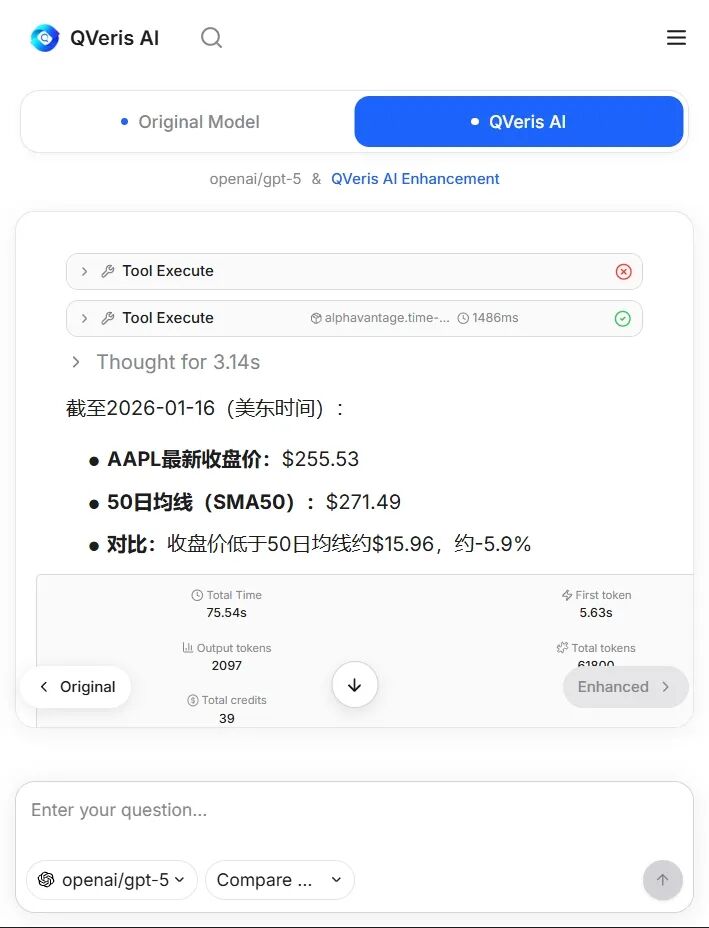
This is one of the most critical, and most easily overlooked, layers in making Agents practical.
As the examples show, after integration, the Agent can call a wide range of financial data with much greater precision.
Starting with FMP, but not stopping at FMP
FMP is only the beginning.
Next, we will continue connecting more professional data, vertical tools, and industry capabilities to the Agent world, so they are no longer just “API lists,” but real action assets that Agents can use.
If you are building Agents, financial analysis workflows, automated decision-making systems, or if you simply care about the question: when will Agents truly become practical?
We will continue sharing integrations like FMP.
Because in our view, the future of Agents does not begin with being better at talking. It begins with being actually usable, actually runnable, and actually able to do work on people’s behalf.
Experience QVeris AI: https://qveris.ai/
Use this article with a skill
Turn the idea above into an agent workflow. Copy the install command or start with the prompt below.
Stock copilot pro
A finance workflow for quotes, fundamentals, filings, earnings context, and analyst-style summaries.
openclaw skills install stock-copilot-proAnalyze AAPL using live market data, recent fundamentals, valuation context, and the latest relevant filings or news. Separate facts from interpretation and cite which QVeris capabilities were called.