
Free Index Constituents API
Sources, Weights & Examples免费指数成分股 API
数据源、权重与调用示例
Compare free sources for current and historical index members, weights, formats, and limits—then validate one API response before production use.
比较可免费获取的当前与历史指数成分、权重、格式和限制,
并在生产接入前验证一次真实 API 返回。
Free index constituents API: what to verify first免费指数成分股 API:首先核对什么
A constituent response needs an index version and a membership state. Current members, announced changes, pro-forma composition, and effective post-rebalance members are different datasets. Preserve announcement, reference, pricing, and effective dates so an application does not treat a future addition as if it were already in the index.
成分响应必须同时说明指数版本与成员状态。当前成分、已宣布调整、模拟组合和调仓生效后的成分属于不同数据集。应保留宣布日、参考日、定价日和生效日,避免应用把未来调入证券误当成当前成员。
A free index constituents API should answer a specific task: given an index identifier and an effective date, return the securities that belonged to the index, ideally with weights and stable identifiers. A usable response must distinguish current membership from announced or pro-forma changes and provide enough evidence to reproduce the snapshot.
免费指数成分 API 应回答一个明确问题:输入指数标识和生效日期,返回当时属于该指数的证券,最好同时提供权重与稳定标识。可用的响应必须区分当前成分、已公告变更和预估成分,并提供足够证据重建该时点快照。
Important: “Free” may mean a trial, a limited free tier, view-only access, or an open endpoint. Verify current pricing, permitted use, attribution, redistribution, and point-in-time history before relying on any source.
重要:“免费”可能指试用、有限免费层、仅查看权限或开放端点。正式使用前应核对最新价格、允许用途、署名、再分发规则和历史时点覆盖。
Coverage a stock index constituents API should provide指数成分股数据接口应提供哪些覆盖
Current index constituents and stable identifiers
Look for ticker, exchange, security name, ISIN or another stable identifier, plus the index code used in the request. Tickers alone can change or collide across exchanges.
Index constituents with weights API
Confirm whether weights are included, whether they are decimals or percentages, the weighting methodology, and the effective timestamp. A member list without weights may be insufficient for replication or exposure analysis.
Historical index constituents API
Backtests need point-in-time membership, additions, deletions, and effective dates. Using today’s members for past periods introduces survivorship bias.
Formats, authentication, pagination, and limits
Check JSON or CSV support, API-key requirements, page size, rate limits, update frequency, error shape, and whether one call can return the complete index.
Announcement, reference, and effective dates
Store the lifecycle of each addition, deletion, and weight change. A rebalance can be announced before pricing and implemented at a later close or open; the correct membership depends on the query time.
Corporate actions and security lineage
Track mergers, spin-offs, delistings, ticker and share-class changes, multiple listings, special dividends, and temporary constituents with stable IDs. Name matching cannot preserve historical continuity.
Weight basis and reconciliation
Confirm free-float or full market-cap basis, equal weighting, capping, divisor treatment, currency, units, and residual. Weight snapshots may be indicative before implementation and drift afterward with prices.
当前指数成分与稳定证券标识
除股票代码外,还应检查交易所、证券名称、ISIN 或其他稳定标识,以及请求使用的指数代码。仅用 Ticker 容易遇到变更或跨市场重名。
指数成分股及权重 API
确认是否返回权重、权重是小数还是百分比、采用何种加权方法,以及数据对应的生效日期。只有成员名单往往不足以做指数复制或暴露分析。
历史指数成分股接口
回测需要时点成员、调入调出记录和生效日期。用今天的成分股回看历史会产生幸存者偏差。
格式、鉴权、分页与限额
检查 JSON/CSV、API Key、分页大小、频率限制、更新周期、错误结构,以及一次请求能否返回完整指数。
宣布日、参考日与生效日
保存每次调入、调出与权重变化的完整生命周期。再平衡可能提前宣布,之后定价,并在更晚的收盘或开盘实施;正确成员取决于查询时点。
公司行动与证券沿革
用稳定 ID 跟踪合并、分拆、退市、代码与份额变化、多地上市、特别股息和临时成分。只匹配名称无法保持历史连续性。
权重基础与核对
确认自由流通或总市值、等权、上限、除数处理、币种、单位和残差。实施前权重可能只是参考值,实施后也会随价格漂移。
Free index constituents API sources to evaluate可评估的免费指数成分股 API 来源
Benchmark sources with one ordinary date, one announced but not yet effective change, one rebalance close, and one corporate-action event. Compare index variant IDs, member state, stable security mapping, total row count, weight units and totals, publication time, revisions, historical depth, and license.
可用普通日期、已宣布但尚未生效的调整、一次调仓收盘和一次公司行动组成测试集,比较指数版本 ID、成员状态、稳定证券映射、总行数、权重单位与合计、发布时间、修订、历史深度和许可。
Use the table as a verification checklist rather than an endorsement. Test each source with one ordinary date, one announced but not yet effective change, one rebalance close, and one corporate-action event; access and terms can change.
下表是验证清单,并不构成背书。应分别测试普通日期、已公告但尚未生效的变更、一次再平衡收盘和一次公司行动;接口权限与使用条款都可能变化。
| Source来源 | Useful signal可用信号 | Verify before use使用前核对 |
|---|---|---|
| FinancialData.net | Documents an index-constituents endpoint, identifier parameter, pagination, and JSON/CSV formats.文档列出指数成分端点、identifier 参数、分页以及 JSON/CSV 格式。 | Current free allowance, supported indices, weights, history, and license.当前免费额度、支持指数、权重、历史数据和许可。 |
| Profit.com | Documents an index constituents route and says API access is available with a free-plan key.文档列出指数成分接口,并说明免费计划可获取 API Key。 | Rate limits, index universe, response fields, history, and production terms.频率限制、指数范围、返回字段、历史覆盖和生产条款。 |
| Ricequant / RQData | Chinese documentation exposes index components by date and separate constituent weights for quantitative workflows.中文文档提供按日期查询指数成分,以及独立的成分权重能力。 | Account tier, market coverage, quotas, and redistribution rights.账户等级、市场覆盖、配额和再分发权限。 |
| Open-source datasets | Projects such as index-constituents publish current or historical files that can help prototypes.部分开源项目提供当前或历史文件,可用于原型验证。 | Upstream provenance, update process, completeness, and non-API operational risk.上游来源、更新机制、完整性,以及非正式 API 的运行风险。 |
Python example for a free index components API免费指数成分股接口的 Python 调用步骤
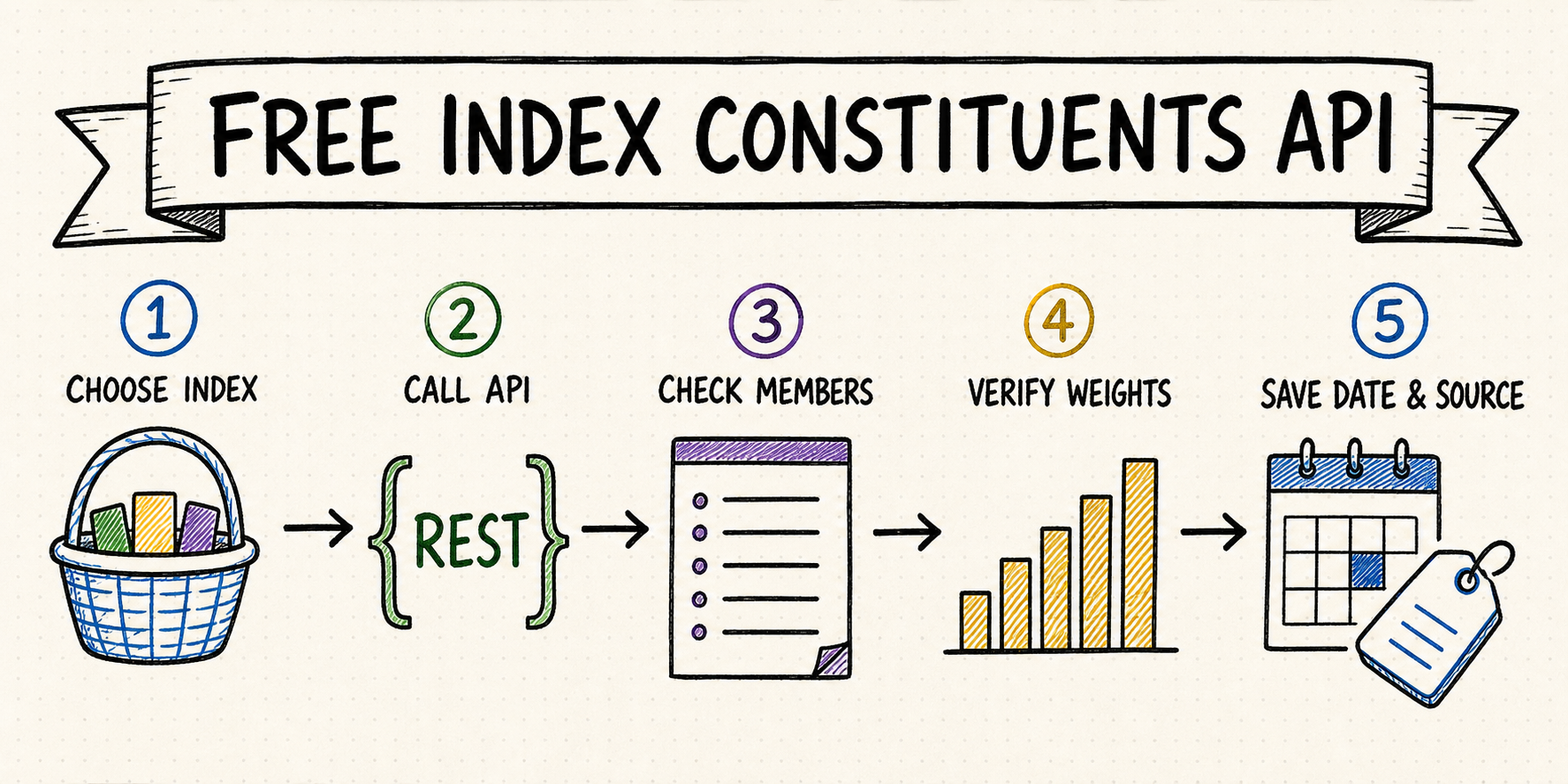
1. Start with a documented index code
Use the provider’s own example identifier and endpoint. For a documented FinancialData.net-style request: requests.get(url, params={"identifier":"^GSPC","format":"json"}, headers={"X-API-Key": api_key}, timeout=20).
2. Validate members, weights, and as-of date
Call raise_for_status(), parse JSON, then assert expected fields, unique identifiers, numeric weight types, an effective date, and a plausible record count. HTTP 200 alone does not prove usable data.
3. Handle pagination and constituent changes
Follow the documented offset or cursor until complete. Store the raw response, retrieval time, provider, index code, and effective date so additions and removals remain auditable.
4. Test historical membership without survivorship bias
If the API accepts a date, compare two known rebalance dates and verify that membership changes. If it only returns current members, do not label the result point-in-time historical data.
5. Reconstruct event-state membership
Represent announced, pro-forma, current, and effective membership separately. Apply changes at the documented implementation time, preserve source announcements, and do not backdate a deletion or addition to the announcement day.
6. Reconcile weights and identifiers
Normalize decimal versus percentage units, sum weights within the stated basis, resolve duplicates by stable ID and listing, and explain cash or residual rows. Test ticker changes and corporate actions without breaking security lineage.
7. Freeze point-in-time snapshots and revisions
Store index version, membership state, as-of and effective times, first publication, correction ID, raw response, parser version, and retrieval time. A backtest must select only the version available at its simulated decision time.
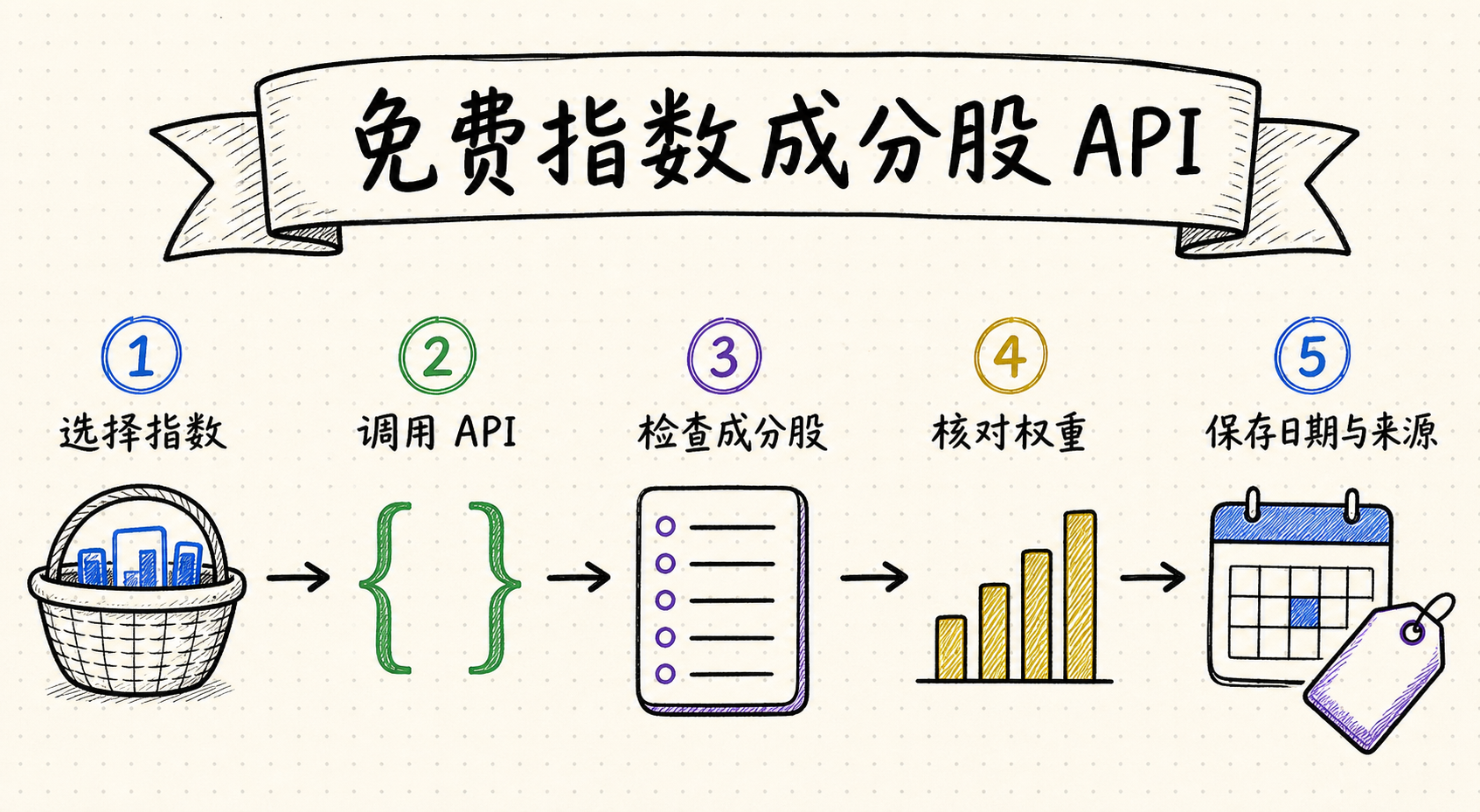
1. 从文档给出的指数代码开始
先使用供应商文档中的指数标识和端点。例如可按文档结构发送:requests.get(url, params={"identifier":"^GSPC","format":"json"}, headers={"X-API-Key": api_key}, timeout=20)。
2. 验证成分、权重和数据日期
调用 raise_for_status() 并解析 JSON,再检查必需字段、唯一证券标识、权重数值类型、生效日期和合理的记录数量。HTTP 200 不等于数据可用。
3. 处理分页与成分调整
按文档中的 offset 或 cursor 拉取完整结果。保存原始返回、抓取时间、供应商、指数代码和生效日期,以便审计调入调出。
4. 避免历史回测的幸存者偏差
若接口支持日期参数,应选择两个已知调仓日比较成员变化。若只返回当前成员,就不能把结果称为时点历史成分数据。
5. 重建事件状态下的成员名单
分别表示已宣布、模拟、当前和生效成员,并在文档规定的实施时点应用变化,保留来源公告,不能把调入调出追溯到宣布日。
6. 核对权重与标识
统一小数与百分比单位,在规定口径内合计权重,用稳定 ID 和上市记录处理重复项,并解释现金或残差。代码变更和公司行动不能切断证券沿革。
7. 冻结时点快照与修订
保存指数版本、成员状态、截至与生效时间、首次发布、更正 ID、原始响应、解析版本和抓取时间。回测只能选择模拟决策时点当时可得的版本。
How QVeris helps connect index data capabilitiesQVeris 如何连接指数数据能力
- Search separately for current constituents, announced changes, historical membership, weights, and index reference data.
- Require publisher, index variant, membership state, as-of and effective date, weight basis, historical requirement, and revision metadata.
- Preserve raw IDs, source announcements, timestamps, completeness checks, and licensing with every normalized snapshot.
- 分别搜索当前成分、已宣布调整、历史成员、权重和指数基础资料能力。
- 明确发布方、指数版本、成员状态、截至与生效日期、权重口径、历史要求和修订元数据。
- 为每个规范化快照保留原始 ID、来源公告、时间戳、完整性检查和许可。
QVeris does not manufacture index constituents, grant an index license, or guarantee a provider’s data. It helps developers and agents discover available capabilities, inspect interfaces, and connect the selected external tool through a consistent workflow.
QVeris 不生产指数成分数据、不授予指数许可,也不保证供应商数据。它帮助开发者与 Agent 发现可用能力、检查接口,并通过一致流程连接选定的外部工具。
- Open the QVeris provider details for relevant financial-data capabilities.
- Inspect inputs, outputs, authentication, provider documentation, and supported index identifiers before connecting.
- Keep provider, effective date, retrieval time, and license notes with each result; QVeris connectivity is not investment advice.
- 打开 QVeris 服务商详情,查看相关金融数据能力。
- 连接前检查输入、输出、鉴权、供应商文档和支持的指数代码。
- 为每条结果保留供应商、生效日期、抓取时间和许可说明;QVeris 的连接能力不构成投资建议。
Free index constituents API FAQ免费指数成分股 API 常见问题
Is there a free API for index constituents?
Yes. Some providers expose a limited free tier or open endpoint. Confirm index coverage, weights, historical depth, rate limits, and license before production use.
How do I get S&P 500 constituents via API?
Pass the provider’s documented S&P 500 identifier, then validate the returned symbols, exchange identifiers, effective date, pagination, and optional weights.
Can a free API return historical index constituents?
Some can, but point-in-time history is less common than current membership. Confirm effective dates and test known rebalance changes before backtesting.
Do index constituent APIs include weights?
Some do. Verify whether weights are percentages or decimals, what methodology applies, and whether the weight date matches the member list.
What is the difference between index constituents and ETF holdings?
Index constituents belong to a benchmark under its methodology. ETF holdings are securities actually held by a fund and can differ because of sampling, cash, fees, or implementation timing.
When does an announced index change become effective?
At the implementation time specified by the index publisher, which can differ from announcement, reference, or pricing dates. Applications should keep future changes separate until that moment.
Why do index weights not always sum to exactly 100%?
Rounding, cash or residual rows, capped-weight methods, indicative versus implemented states, and unit errors can cause differences. Verify the published basis before rescaling.
How should ticker changes be handled in constituent history?
Map each listing to a stable security or issuer identifier and preserve effective dates. Do not treat a renamed or relisted security as a new company solely because the display ticker changed.
有免费的指数成分股 API 吗?
有些供应商提供有限免费层或开放端点。生产使用前应核对指数覆盖、权重、历史深度、频率限制和许可。
如何通过 API 获取标普 500 成分股?
使用供应商文档规定的标普 500 指数代码,再验证返回的证券代码、交易所标识、生效日期、分页和权重字段。
免费接口能查询历史指数成分吗?
部分可以,但时点历史数据通常比当前成员更少见。回测前应核对生效日期,并用已知调仓记录验证变化。
指数成分股接口会返回权重吗?
部分接口会返回。需要确认权重是百分比还是小数、采用何种方法,以及权重日期是否与成员名单一致。
指数成分股与 ETF 持仓有什么区别?
指数成分由基准方法确定;ETF 持仓是基金实际持有的证券,可能因抽样、现金、费用或执行时间而不同。
已宣布的指数调整何时生效?
应以指数发布方规定的实施时点为准,它可能不同于宣布日、参考日或定价日。生效前,应用应把未来调整与当前成员分开。
为什么指数权重合计不总是恰好 100%?
舍入、现金或残差、权重上限方法、参考与已实施状态差异,以及单位错误都可能造成偏差。重新缩放前,应先核对发布方口径。
成分历史中的代码变更应怎样处理?
将每个上市记录映射到稳定证券或发行人标识,并保留生效日期。不能只因为展示代码变化,就把改名或重新上市证券视为新公司。