
Connect a Free Live Crypto Data API
with Confidence可靠接入免费实时加密货币数据 API
从验证到调用
Use a free live crypto data API to add current prices and market fields, then verify freshness, limits, and delivery before your app depends on it.
接入免费实时加密货币数据 API 获取币价与市场字段,
并在应用依赖它之前验证新鲜度、限制与传输方式。
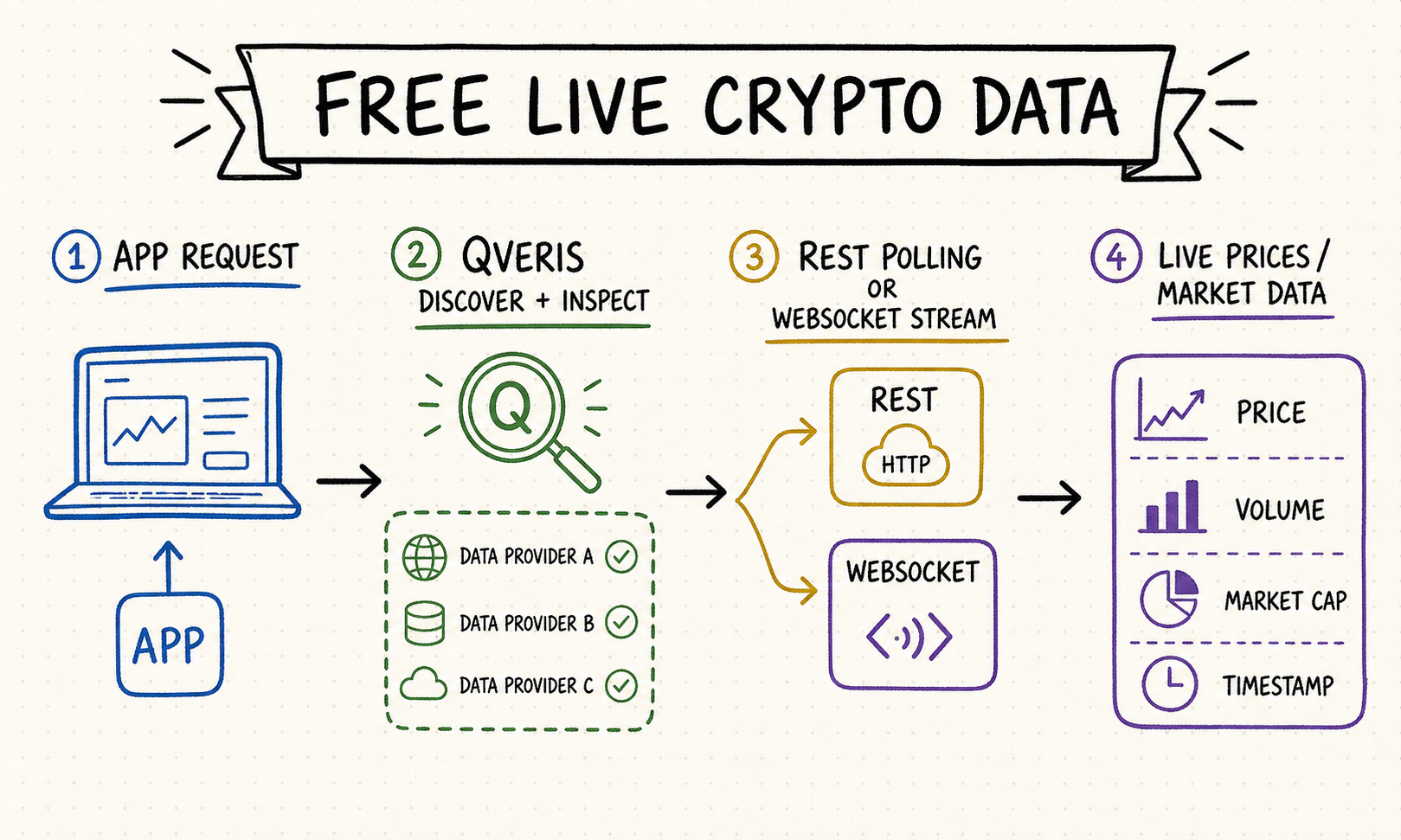
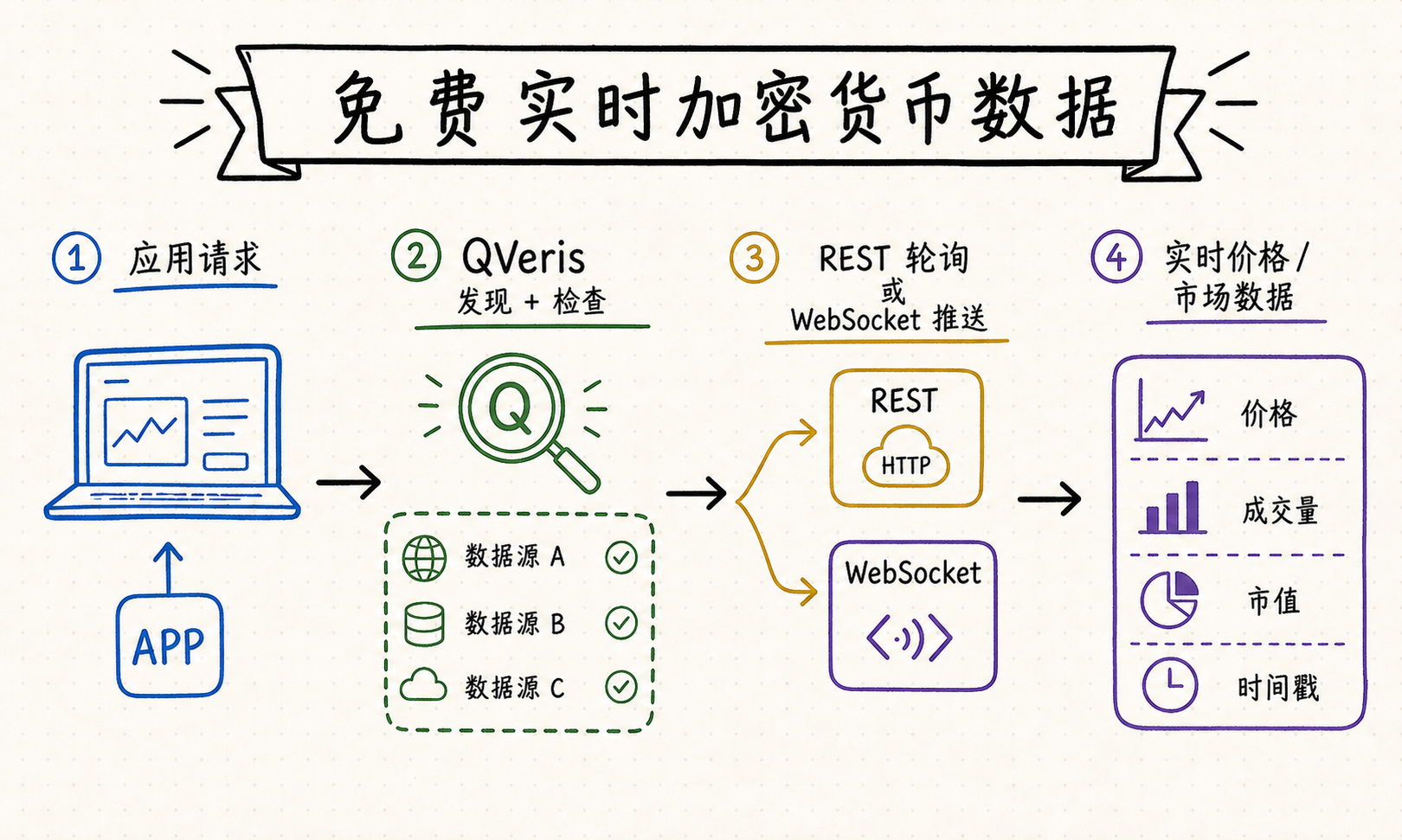
Free live crypto data API: the practical answer免费实时加密货币数据 API:实用结论
A watchlist refreshed every minute, an alert engine, and a tick chart do not need the same delivery method or quota.
Confirm the source timestamp and refresh interval. A frequently cached REST snapshot is not the same as a trade stream.
Record request credits, rate limits, allowed endpoints, history depth, attribution, and commercial-use terms.
Cache the last valid value, detect stale responses, back off after limits, and reconnect streams safely.
每分钟刷新的自选列表、提醒服务与逐笔图表,对传输方式和配额的要求完全不同。
检查数据源时间戳与刷新频率。高频缓存的 REST 快照并不等于逐笔成交推送。
记录请求额度、限流、可用端点、历史深度、署名要求与商业使用条款。
缓存最后有效值,检测陈旧响应,触发限流后退避,并安全恢复流式订阅。
What a real-time crypto price API should return实时加密货币价格 API 应返回什么
A useful cryptocurrency market data API returns more than a price. For each asset, inspect the symbol or provider-specific identifier, quote currency, source timestamp, price, volume, market cap, and the response timestamp. Historical OHLCV is a separate capability and may not be included in a free live endpoint.
实用的加密货币行情 API 不应只有一个价格。至少要检查资产代码或供应商 ID、计价货币、源时间戳、价格、成交量、市值和响应时间。加密货币历史价格数据 API 通常是另一项能力,未必包含在免费实时端点中。
Validate freshness instead of trusting the label不要只看“实时”标签,要验证数据新鲜度
Compare the provider timestamp with your receipt time and measure the gap over several requests. Also confirm whether the value is a venue price, an aggregate, a midpoint, or a cached reference price.
对比供应商时间戳与客户端接收时间,并连续测量多次请求的差值;还要确认返回值是单一交易所价格、聚合价、中间价还是缓存参考价。
Choose fields for the application, not the demo按应用选择字段,不要只满足演示
Dashboards often need bulk prices, 24-hour change, volume, and market cap. Alerts need stable identifiers and timestamps. Execution-sensitive systems need venue-level bid/ask or order-book data, which a general price endpoint may not provide.
行情看板通常需要批量价格、24 小时涨跌、成交量和市值;提醒工具需要稳定 ID 与时间戳;对成交敏感的系统则需要交易所级买卖价或订单簿,通用币价接口通常无法替代。
Worked example: normalize venue and quote currency before aggregation实算示例:聚合前先统一交易所与计价货币
Assume Venue A reports BTC/USDT at 60,000 with 120 BTC of eligible volume in the selected window, while Venue B reports BTC/USD at 60,120 with 80 BTC. If contemporaneous USDT/USD is 0.998, Venue A's normalized dollar price is 59,880, not 60,000. The stablecoin is a quote asset with its own market value; treating it as exactly one dollar can create a false cross-venue signal.
假设交易所 A 的 BTC/USDT 报价为 60,000,选定窗口内有效成交量为 120 BTC;交易所 B 的 BTC/USD 报价为 60,120,成交量为 80 BTC。若同一时点的 USDT/USD 为 0.998,则交易所 A 换算后的美元价格是 59,880,而不是 60,000。稳定币本身也是有市场价格的计价资产;一律按一美元处理,会制造虚假的跨交易所价差信号。
| Step步骤 | Calculation计算 | Required evidence必须保留的证据 |
|---|---|---|
| Normalize Venue A统一交易所 A 报价 | 60,000 × 0.998 = $59,880 | BTC contract or asset ID, venue, pair, midpoint or trade basis, event time, and USDT/USD source time.BTC 合约或资产 ID、交易所、交易对、中间价或成交价口径、事件时间及 USDT/USD 来源时间。 |
| Volume-weighted reference成交量加权参考价 | ($59,880×120 + $60,120×80) ÷ 200 = $59,976 | Matched window, comparable BTC volume units, included venues, excluded stale quotes, and aggregation version.完全一致的时间窗口、可比的 BTC 成交量单位、纳入的交易所、被排除的陈旧报价及聚合版本。 |
| Naive unweighted average简单算术平均 | ($59,880 + $60,120) ÷ 2 = $60,000 | This gives equal influence to both venues regardless of activity and is not the same benchmark.它不考虑交易活跃度,让两个交易所拥有相同影响力,因此不是同一种基准。 |
Aggregation does not automatically make data safer. Venue volume can use different windows or units, include duplicated or low-quality activity, and arrive later than price. Define eligibility and outlier rules before weighting. Also label whether “24-hour change” is a rolling 24-hour comparison or change since 00:00 UTC; crypto trades continuously, so those boundaries produce different numbers. Keep exchange prices and the aggregate separately so an alert can explain its source.
聚合不代表数据天然更可靠。不同交易所的成交量可能使用不同窗口或单位,包含重复或低质量交易,也可能比价格更晚到达。加权前必须先定义纳入条件与异常值规则。同时应说明“24 小时涨跌”采用滚动 24 小时,还是从 UTC 00:00 起算;加密市场连续交易,两种边界会产生不同结果。交易所原始价格与聚合结果应分别保存,便于提醒解释其来源。
REST or crypto WebSocket API for live data?实时行情该用 REST 还是加密货币 WebSocket API?
| Method方式 | Best fit适合场景 | Watch for注意事项 |
|---|---|---|
| REST | Price cards, portfolio snapshots, scheduled jobs, prototypes价格卡片、资产快照、定时任务、原型 | Polling interval, request quota, caching, 429 backoff轮询间隔、请求配额、缓存、429 退避 |
| WebSocket | Live charts, rapid alerts, trades, order books实时图表、快速提醒、逐笔成交、订单簿 | Heartbeat, reconnect, subscription recovery, sequence gaps心跳、重连、订阅恢复、序列缺口 |
REST API for cryptocurrency prices实时币价 REST API
Use REST when a fresh snapshot is enough. Request multiple symbols per call when supported, cache responses briefly, and avoid letting every browser client consume the provider quota independently.
只需要新鲜快照时使用 REST。若供应商支持,应一次请求多个币种;短时缓存响应,并避免每个浏览器客户端分别消耗供应商配额。
WebSocket API for live crypto prices免费实时加密货币行情接口的 WebSocket 模式
Use a stream when changes must arrive without repeated polling. Production code should handle heartbeat messages, exponential reconnect, resubscription, duplicate events, and a stale-data timer.
需要持续推送而非重复轮询时使用流。生产代码应处理心跳、指数退避重连、重新订阅、重复事件与陈旧数据计时器。更深入的实现细节可阅读 QVeris 免费加密货币 WebSocket API 指南。
Free crypto API checklist before integration接入免费加密货币 API 前的检查清单
Coverage and identifiers覆盖范围与资产标识
Check supported assets, exchanges, quote currencies, contract-address lookup, bulk endpoints, and symbol collisions.检查币种、交易所、计价币、合约地址查询、批量端点与同名代码冲突。
Authentication and rate limits鉴权与调用限制
A free crypto API without an API key may be convenient, but it still has acceptable-use rules. Document quotas and keep keys on the server when authentication is required.无需 API 密钥的加密货币价格接口便于测试,但仍有合理使用规则。需要鉴权时,应记录额度并把密钥保存在服务端。
Data rights and attribution数据权利与署名
Verify whether the free plan permits public display, commercial use, redistribution, caching, and derived analytics. Do not infer rights from technical accessibility.确认免费计划是否允许公开展示、商业使用、再分发、缓存与衍生分析,不要把“能访问”当成“有权使用”。
Reliability and migration可靠性与迁移
Normalize provider fields behind your own adapter, log source timestamps, and define a fallback or degraded state before launch.通过自有适配层统一字段,记录源时间戳,并在上线前定义回退或降级状态。
How to connect a free API for crypto prices如何接入免费数字货币行情 API 接口
1. Write the data contract
List required assets, fields, quote currency, acceptable delay, refresh rate, and historical depth before choosing a provider.
2. Inspect one live response
Call a documented endpoint, record the HTTP status and headers, then verify types, null values, identifiers, and timestamps.
3. Add caching and limits
Cache snapshots for the shortest interval your use case permits, coalesce duplicate requests, and back off on 429 or transient errors.
4. Test stale and failure states
Simulate missing assets, delayed responses, exhausted quota, malformed payloads, and stream disconnects before connecting the feed to user-facing decisions.
1. 写清数据契约
选供应商前列出所需币种、字段、计价币、可接受延迟、刷新频率和历史深度。
2. 检查一条实时响应
调用文档中的端点,记录 HTTP 状态和响应头,再检查类型、空值、资产 ID 与时间戳。
3. 加入缓存与限流
按业务允许的最短周期缓存快照,合并重复请求,并在 429 或临时错误后退避。
4. 测试陈旧与失败状态
模拟币种缺失、响应延迟、额度耗尽、载荷异常与流断开,再把数据接入面向用户的决策。
Match the live crypto API to the product use case按产品场景匹配实时加密货币 API
The word “live” describes several very different workloads. Before comparing providers, decide how quickly a change must reach the user, how many assets are visible at once, whether every update must be retained, and what happens when the source pauses. That decision usually matters more than the size of a provider’s coin list.
“实时”可能对应完全不同的工作负载。比较供应商之前,应先明确价格变化需要多快到达用户、同时展示多少资产、是否必须保存每次更新,以及数据源暂停时产品如何降级。这些条件通常比币种列表的长度更重要。
| Use case使用场景 | Typical data常用数据 | Delivery pattern传输方式 | Main risk主要风险 |
|---|---|---|---|
| Portfolio dashboard资产看板 | Bulk prices, 24h change, market cap批量价格、24 小时涨跌、市值 | Cached REST every 30–120 seconds每 30–120 秒缓存 REST 快照 | Wasting quota on one request per asset逐币请求浪费额度 |
| Price alert价格提醒 | Price, timestamp, stable asset ID价格、时间戳、稳定资产 ID | Fast polling or WebSocket快速轮询或 WebSocket | Duplicate alerts and stale triggers重复提醒与陈旧数据误触发 |
| Live chart实时图表 | Trades, candles, sequence or event time逐笔成交、K 线、序列号或事件时间 | WebSocket with snapshot recoveryWebSocket 推送,并通过快照恢复状态 | Missing events after reconnect重连后丢失事件 |
| Research and backtesting研究与回测 | Historical OHLCV, metadata, corporate actions历史 OHLCV、元数据、资产事件 | Paginated historical REST分页历史 REST 接口 | History excluded from the free live plan免费实时计划不包含历史数据 |
| AI agent or assistantAI Agent 或助手 | Current price plus source and timestamp当前价格、来源与时间戳 | On-demand capability call按需能力调用 | Presenting an unverified value as current把未经验证的数值当作当前价格 |
A dashboard needs efficient bulk snapshots行情看板需要高效的批量快照
Prefer an endpoint that accepts many asset identifiers in one request and returns a source timestamp for each result. Put the provider call behind your server, share the cached response across users, and refresh only as often as the interface promises. This protects the free tier and creates one place to normalize symbols and null values.
优先选择能够一次接收多个资产 ID、并为结果提供源时间戳的端点。将供应商调用放在服务端,在用户之间共享缓存,并只按界面承诺的频率刷新。这样既能保护免费额度,也能集中处理币种代码与空值。
Alerts need idempotency and a freshness rule提醒服务需要幂等与新鲜度规则
Store the last processed event or timestamp and generate a stable alert key from asset, condition, and threshold. Reject data older than the product’s freshness window, so a delayed replay or reconnect cannot trigger a notification that appears current.
保存最后处理的事件或时间戳,并使用资产、条件与阈值生成稳定的提醒键。超过产品新鲜度窗口的数据应被拒绝,避免延迟重放或重连把旧价格误判为当前价格并触发通知。
Production architecture for reliable live market data可靠实时行情的生产架构
Do not connect a public browser directly to a metered provider key. A small server-side adapter gives the application a stable contract while the upstream API can change symbols, field names, quotas, or authentication. The adapter should validate the payload before it enters the rest of the product.
不要让公共浏览器直接连接带额度的供应商密钥。服务端适配层可以为应用提供稳定契约,同时隔离上游 API 的币种代码、字段名、额度或鉴权变化。数据进入产品其他模块之前,应先由适配层完成验证。
Normalize one internal market-data schema统一内部行情数据 Schema
Map provider-specific IDs into fields such as assetId, symbol, quoteCurrency, price, volume24h, marketCap, sourceTime, receivedAt, and source. Preserve the original payload for debugging when policy permits.将供应商字段映射为 assetId、symbol、quoteCurrency、price、volume24h、marketCap、sourceTime、receivedAt 与 source;在条款允许时保留原始载荷用于排错。
Separate source time from receipt time区分源时间与接收时间
Source time describes when the market observation was produced. Receipt time describes when your service obtained it. Keeping both lets you measure provider delay, network delay, cache age, and whether the value is safe to display as current.源时间表示市场观测何时产生,接收时间表示服务何时获得数据。保留两者才能测量供应商延迟、网络延迟、缓存年龄,并判断数值能否作为当前行情展示。
Use bounded retries and circuit breaking使用有限重试与熔断
Retry only transient failures, add jitter, respect Retry-After, and stop retrying when the quota is exhausted. A circuit breaker prevents a provider outage from becoming a request storm inside your own application.只重试临时故障,加入随机抖动,遵守 Retry-After,并在额度耗尽后停止重试。熔断器可避免供应商故障演变成应用内部的请求风暴。
Expose a visible degraded state明确展示降级状态
If the latest value is outside the freshness target, label it as delayed or unavailable instead of silently showing the last cached price. User-facing timestamps and source labels are especially important for financial data.如果最新数值超过新鲜度目标,应显示“延迟”或“不可用”,而不是静默展示最后缓存价格。对金融数据而言,面向用户的时间戳与来源标签尤其重要。
Minimum observability to add before launch上线前应具备的最低可观测性
- Request count, credit consumption, 429 rate, latency percentiles, and upstream error rate.
- Age of the newest accepted observation and percentage of rejected stale responses.
- WebSocket connection state, reconnect count, heartbeat age, and subscription count.
- Cache hit rate, fallback usage, missing assets, schema validation failures, and null-field frequency.
- 请求量、额度消耗、429 比例、延迟分位数与上游错误率。
- 最新有效观测的年龄,以及因陈旧被拒绝的响应比例。
- WebSocket 连接状态、重连次数、心跳年龄与订阅数量。
- 缓存命中率、回退使用量、缺失资产、Schema 验证失败与空字段频率。
Use QVeris to find a free live crypto data API用 QVeris 查找并检查免费实时加密货币数据 API
QVeris helps developers and AI agents discover callable capabilities, inspect their schemas and requirements, and route a request through a consistent capability layer. It does not erase a provider’s limits, licensing, or data-quality responsibilities.
QVeris 帮助开发者与 AI Agent 发现可调用能力、检查数据结构和使用要求,并通过统一的能力层发起请求。它不会消除数据供应商的限流、授权条款或数据质量责任。
- Open the QVeris tool details to review current crypto and market-data capabilities.
- Inspect inputs and outputs before wiring a capability into a workflow.
- Keep validation, caching, stale-data detection, and user-facing disclosures in your application.
- For a provider-focused shortlist, see the best free crypto data API comparison.
- 使用 QVeris tool details 查找当前可用的加密货币与市场数据能力。
- 把能力接入工作流之前,先检查输入、输出与使用要求。
- 应用仍需负责验证、缓存、陈旧数据检测与面向用户的说明。
- 如需供应商选型,可查看最佳免费加密货币数据 API 对比。
FAQ
Is there a free API for live crypto prices?
Yes. Free REST endpoints and free tiers exist, but “live” may mean cached snapshots rather than streaming trades. Verify timestamps, quotas, rights, and authentication.
Which crypto API is best for real-time data?
The best fit depends on assets, fields, latency, delivery method, limits, and data rights. Test the exact endpoint against your application contract.
Can I get crypto prices without an API key?
Some public endpoints allow keyless tests. They can still apply fair-use limits, attribution, IP limits, or restricted commercial rights.
What are free crypto API rate limits?
They vary by provider and may be counted by request, credit, minute, day, month, or stream connection. Read the current plan documentation.
Should I use REST or WebSocket for live crypto data?
Use REST for snapshots and modest refresh intervals. Use WebSocket for continuous updates, with heartbeat, reconnect, replay, and stale-data handling.
有免费的实时加密货币价格 API 吗?
有,但“实时”可能指缓存快照而非逐笔流。接入前应验证时间戳、额度、数据权利与鉴权要求。
哪个加密货币 API 适合实时行情?
取决于币种、字段、延迟、传输方式、限制与数据权利。应使用真实端点对照应用数据契约测试。
免费加密货币 API 需要密钥吗?
部分公共端点支持无密钥测试,但仍可能有合理使用、署名、IP 限制或商业用途约束。
免费行情 API 有哪些调用限制?
供应商可能按请求、积分、分钟、天、月或流连接计数,应查看当前计划文档,不能依赖旧数据。
实时行情应该用 REST 还是 WebSocket?
快照与适度刷新用 REST;持续更新用 WebSocket,并实现心跳、重连、补数和陈旧检测。