
Together AI Alternatives
By Compute Operating Model
Together AI 替代方案:按算力运营模式选择
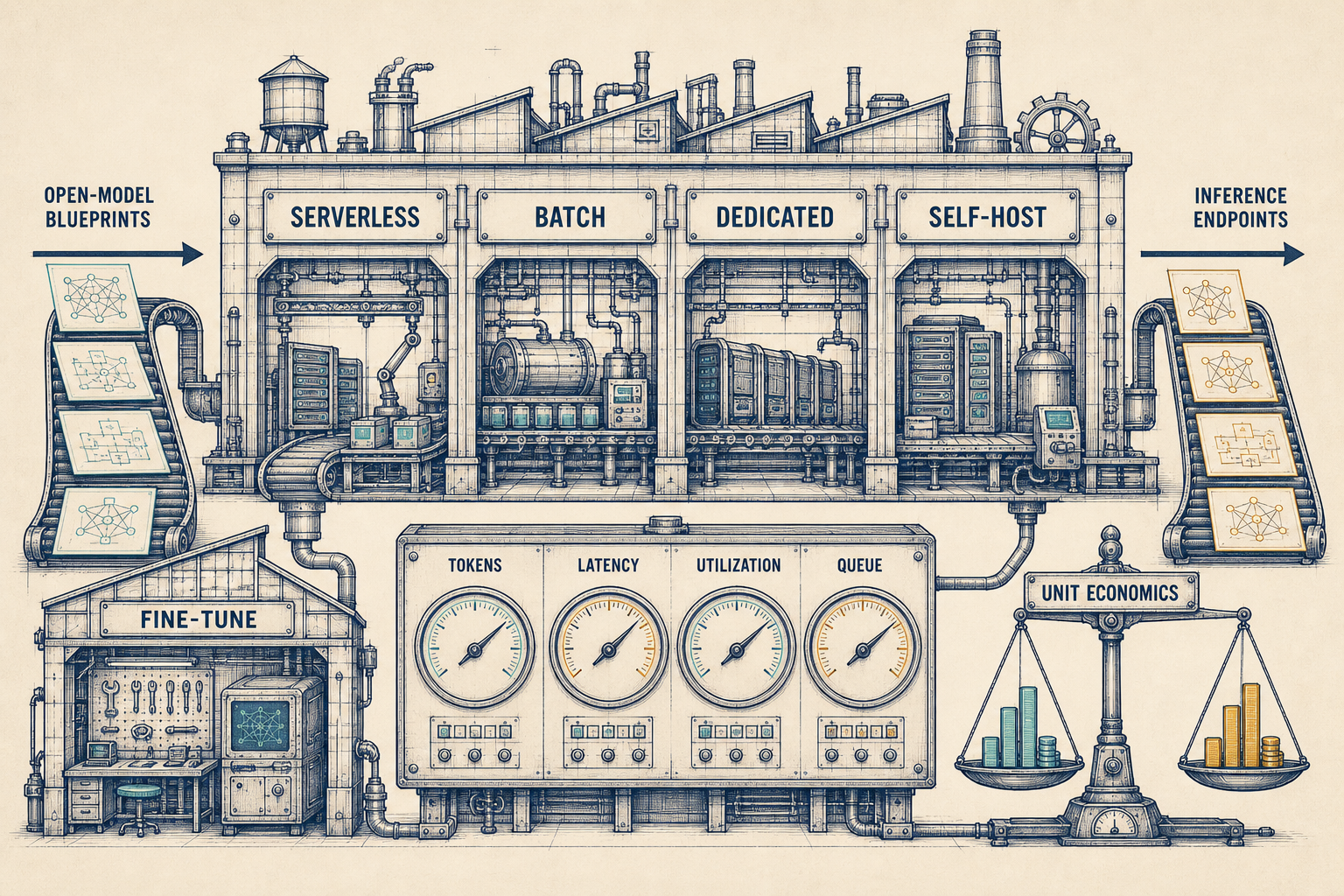
Serverless, batch, dedicated endpoints, and self-hosting optimize different demand shapes. Compare successful-token economics, tail latency, model control, and operator work—not one headline rate.
无服务器、批处理、专用端点与自托管适配不同需求曲线。应比较成功 Token 经济性、尾延迟、模型控制与运维工作,而不是单一挂牌价。
TL;DR
Its current product scope includes serverless, batch, dedicated model and container inference, fine-tuning, and broader model development infrastructure.
Bursty experiments favor serverless; delay-tolerant jobs favor batch; steady latency-sensitive traffic can justify dedicated capacity.
Model name alone does not fix quantization, serving engine, context settings, speculative decoding, hardware, or concurrency behavior.
It gives agents governed access to data, APIs, and tools after inference; it is not GPU inference infrastructure.
其当前产品范围包括无服务器、批处理、Dedicated 模型与 Container 推理、微调及更广模型开发基础设施。
突发实验适合无服务器,容忍延迟的任务适合批处理,稳定且延迟敏感的流量可能适合 Dedicated 容量。
模型名称不能确定量化、Serving Engine、上下文设置、推测解码、硬件或并发行为。
它在推理后向智能体提供受治理的数据、API 与工具访问,不是 GPU 推理基础设施。
Choose the compute contract before the provider 先选算力合同,再选供应商
Pay per unit with no capacity planning. Strong for variable demand; validate cold behavior, shared capacity, rate limits, and model churn.
Trade completion time for lower cost on offline evaluation, enrichment, synthetic data, or backfills. Validate job limits, ordering, retries, and deadlines.
Reserve resources for predictable performance and customization. Utilization becomes the central economic variable.
Own hardware choice, engine, data, and release cadence. Also own capacity, security, upgrades, observability, and incidents.
按单位付费,无需容量规划;适合波动需求,但要验证冷启动、共享容量、限流与模型变动。
用完成时间换取离线评估、富化、合成数据或回填的低成本;验证任务限制、顺序、重试与截止时间。
预留资源以获得可预测性能与定制;利用率成为核心经济变量。
掌握硬件、Engine、数据与发布节奏,同时承担容量、安全、升级、可观测与事故。
Eight alternatives by infrastructure priority 按基础设施优先级划分的 8 个替代方案
| Platform 平台 | Best-fit priority 最适合优先项 | Trade-off to prove 需要证明的取舍 |
|---|---|---|
| Fireworks AI | Fast serverless and customized open-model inference 快速无服务器与定制开放模型推理 | Model fit and dedicated economics 模型匹配与 Dedicated 经济性 |
| Baseten | Production model deployment and autoscaling 生产模型部署与自动扩容 | Operational abstraction versus cost 运维抽象与成本 |
| GroqCloud | Very low latency on supported models 支持模型上的极低延迟 | Catalog and customization breadth 目录与定制广度 |
| Cerebras Inference | High-speed inference for selected open models 特定开放模型的高速推理 | Model coverage and workload fit 模型覆盖与工作负载匹配 |
| Replicate | Simple versioned deployment of diverse models 多样模型的简单版本化部署 | Cold starts and steady-load economics 冷启动与稳定负载经济性 |
| Modal | Programmable serverless GPU workloads 可编程无服务器 GPU 工作负载 | More engineering ownership 更多工程责任 |
| Cloud AI platforms | Enterprise contracts, regions, and private networking 企业合同、区域与私有网络 | Complexity, portability, and price 复杂性、可迁移性与价格 |
| vLLM on owned compute | Maximum engine and infrastructure control 最大 Engine 与基础设施控制 | Utilization and operator burden 利用率与运维负担 |
Find the utilization crossover 找到利用率交叉点
For the same 30-day traffic trace, calculate cost per successful million output tokens and cost per accepted business result. Serverless cost includes input, output, cached tokens, failed requests, retries, and platform fees. Dedicated cost includes reserved capacity, idle time, deployment replicas, support, and minimums. Self-hosted cost includes GPUs, networking, storage, observability, orchestration, depreciation, and operator hours.
用同一份 30 天流量记录,计算每百万成功输出 Token 成本和每个被接受业务结果成本。无服务器包括输入、输出、缓存 Token、失败、重试和平台费;Dedicated 包括预留容量、空闲、Replica、支持与最低承诺;自托管包括 GPU、网络、存储、可观测、编排、折旧与运维工时。
Crossover rule: dedicated capacity wins only when measured utilization, latency, and reliability savings exceed idle capacity and operating commitments.
交叉规则:只有实测利用率、延迟和可靠性收益超过空闲容量与运营承诺时,Dedicated 才更划算。
Benchmark a model-serving system, not a model name 基准测试模型服务系统,而非模型名称
- Freeze model revision, quantization, context length, decoding settings, prompt distribution, and output targets.
- Replay steady, burst, long-context, and high-concurrency phases; report p50, p95, and p99 time to first token and inter-token latency.
- Measure throughput at the quality threshold, error rate, queue time, cold behavior, and recovery from a forced replica or provider failure.
- Record charged units, autoscaling delay, throttling, batch completion, deployment work, and operator interventions.
- 冻结模型 Revision、量化、上下文长度、解码设置、提示词分布与输出目标。
- 回放稳定、突发、长上下文与高并发阶段;报告 p50、p95、p99 首 Token 与 Token 间延迟。
- 测量质量门槛下吞吐、错误率、排队、冷启动,以及强制 Replica 或供应商故障后的恢复。
- 记录计费单位、扩容延迟、限流、批处理完成、部署工作与人工干预。
Migrate the serving contract 迁移模型服务合同
Version the model artifact, tokenizer, prompt template, tool schema, decoding parameters, safety filters, endpoint limits, and performance SLO. Package representative requests and expected quality ranges. Deploy the candidate in shadow, then canary by tenant or workload. Keep both endpoint and model rollback until quality, tail latency, costs, and failure recovery reconcile.
版本化模型 Artifact、Tokenizer、提示词模板、工具结构定义、解码参数、安全过滤、端点限制与性能 SLO。打包代表性请求与预期质量范围;先影子部署,再按租户或工作负载 Canary。在质量、尾延迟、成本与故障恢复核对前,保留端点与模型双重回滚。
Inference infrastructure and capability infrastructure 推理基础设施与能力基础设施
Together AI or an alternative runs the model that plans or interprets. QVeris gives the resulting agent governed access to financial data, business APIs, and operational tools. Carry a shared trace ID from the inference endpoint through every capability call.
Together AI 或替代方案运行负责规划或理解的模型;QVeris 向生成的智能体提供受治理的金融数据、业务 API 与运营工具访问。共享调用链 ID 应从推理端点贯穿每次能力调用。
A Production Evaluation Plan for Together AI alternativesTogether AI 替代方案的生产评估方案
A feature table can identify candidates, but it cannot prove operational fit. Evaluate Together AI alternatives with the workloads, policies, failure conditions, and evidence requirements that the team will actually own after migration.
功能表可以帮助筛选候选方案,却无法证明生产适配性。评估Together AI 替代方案时,应使用团队迁移后真正需要承担的工作负载、策略、失败条件和证据要求。
Inventory representative requests and record open-model availability, dedicated versus serverless endpoints, fine-tuning, batch jobs, throughput, regional capacity, and serving controls. Include volumes, tail latency, quality thresholds, regulated data, operator steps, monthly spend, and the incidents the current system already knows how to handle.
盘点有代表性的请求,并记录开放模型可用性、专用与无服务器端点、微调、批处理、吞吐、区域容量和服务控制。同时纳入流量、长尾延迟、质量门槛、受监管数据、人工步骤、月度支出,以及现有系统已经能够处理的事故类型。
To validate Together AI Alternatives, replay saved cases against each candidate. Compare accepted parameters, streaming events, structured output, tool calls, error classes, usage accounting, and source metadata. Mark every difference as required, adaptable, or a migration blocker.
验证“Together AI 替代方案”时,用保存的案例重放每个候选方案,比较参数、流式事件、结构化输出、工具调用、错误类别、用量计量和来源元数据,并将差异标记为必须保留、可以适配或阻断迁移。
To validate Together AI Alternatives, measure end-to-end task completion, output quality, p50 and tail latency, availability, retry amplification, fallback behavior, and accepted-result cost. Include rate limits, malformed responses, regional loss, schema drift, and provider outages.
验证“Together AI 替代方案”时,衡量端到端任务完成率、输出质量、常规与长尾延迟、可用性、重试放大、故障切换行为和合格结果成本,并加入限流、畸形响应、区域丢失、Schema 漂移与供应商中断。
Before rolling out Together AI Alternatives, version routing and policy outside the vendor, preserve trace identifiers, stage read-only traffic first, define rollback signals, and retain a direct-provider or previous-platform path until evidence meets the acceptance threshold.
上线“Together AI 替代方案”前,在供应商之外版本化路由与策略,保留追踪标识,先迁移只读流量,定义回滚信号,并在证据达到验收门槛前保留直连供应商或原平台路径。
FAQ
Fireworks AI is a strong direct comparison. Groq and Cerebras emphasize speed on supported catalogs; Replicate emphasizes deployment simplicity.
When traffic is steady enough to utilize reserved capacity and latency, isolation, customization, or predictable economics justify the commitment.
No. It can be cheaper at sustained utilization, but include idle GPUs, redundancy, engineering, security, upgrades, and incidents.
No. It complements model infrastructure with governed external capabilities.
Fireworks AI 是直接比较项;Groq 与 Cerebras 强调支持目录上的速度,Replicate 强调部署简单。
当流量足够稳定能利用预留容量,且延迟、隔离、定制或可预测经济性值得承担承诺时。
不一定。持续高利用率时可能更便宜,但要计入空闲 GPU、冗余、工程、安全、升级与事故。
不托管。它以受治理的外部能力补充模型基础设施。